Is 40 gsm greaseproof too thin for a kebab wrap?
No, 40 gsm is the usual kebab and burger wrap weight. Go to 45 gsm if the wrap carries a lot of sauce or sits in a delivery bag for more than twenty minutes.
By the team at The Greaseproof Paper ·
Every greaseproof quote carries a gsm figure, and most buyers skip past it. This guide explains what that number does to the feel of a wrap, how far it changes grease hold-out, and which weight each kind of counter tends to settle on.
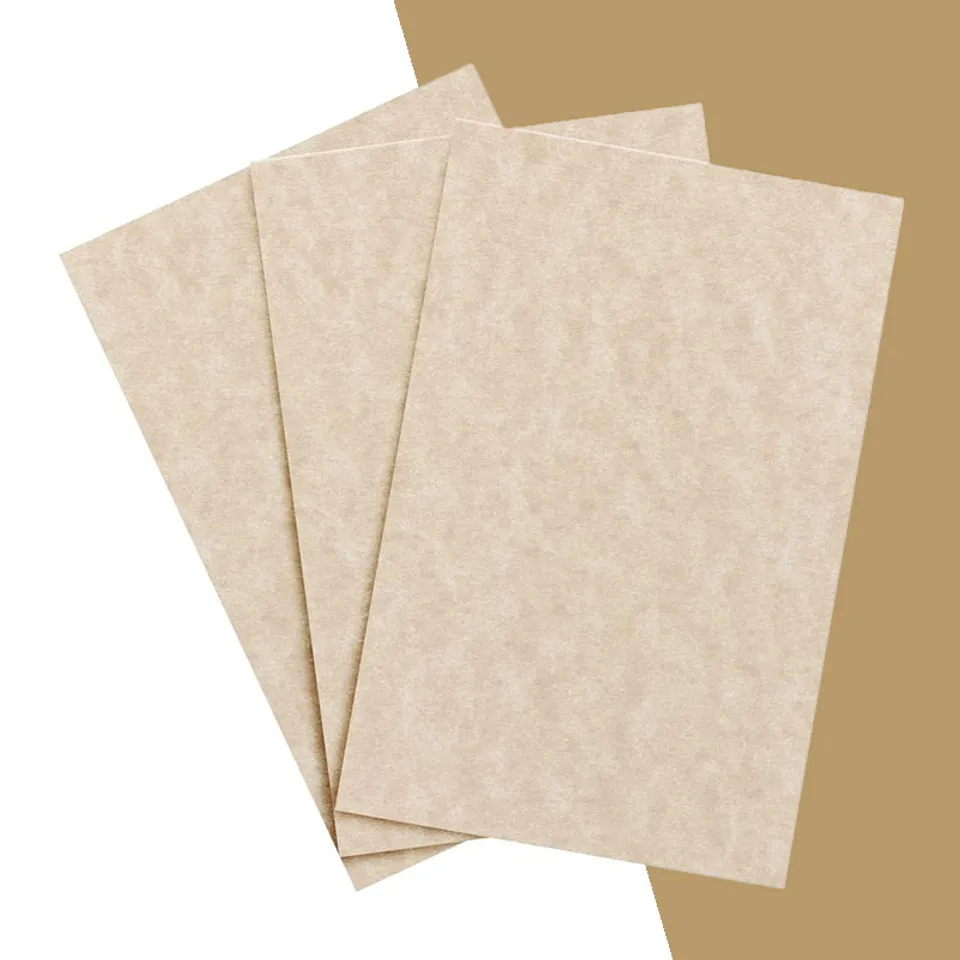
Gsm is grams per square metre: the weight of a one metre square of the paper. For greaseproof the working range runs from about 30 gsm at the light end to about 60 gsm at the heavy end, and the number sits on every quote next to the size.
A higher figure means more fibre in every square centimetre. The sheet gets thicker, stiffer and a little less see-through, and a carton of it is noticeably heavier to lift onto the shelf. Thickness is measured separately in microns, but on greaseproof the two track closely enough that gsm is a fair shorthand.
What gsm does not tell you on its own is how well the paper resists grease. That depends on how hard the pulp was beaten and how dense the sheet is, which is why a well-made 35 gsm can outperform a loosely made 45 gsm.
Pick up a 30 gsm sheet and it drapes like tissue. It folds around a round bun easily but the corners do not hold a crease, so a wrap can spring open in the bag. At 40 gsm the sheet has a bit of body: a fold stays put and the paper rustles when you tuck it.
By 50 gsm you are into something that stands up on its own. It lines a basket without slumping and takes a sharp corner fold that looks tidy on the counter. Beyond that, at 55 to 60 gsm, the paper feels more like a lightweight wrapping stock, and it is the base for coated freezer paper.
The customer notices this too. A burger handed over in a floppy sheet feels like an afterthought. The same burger in a crisp 40 gsm wrap with a printed logo feels like it came from somewhere that cares.
For a wrapped portion of chips, usually yes. Hot chips give off steam and fat at the same time, and a 30 gsm sheet goes translucent and soft at the folds within minutes. It is fine as an open sheet in a tray or a cone where nothing is tucked, and it is the usual choice when the paper is one layer of several.
Light grades shine on the bakery side. A 30 to 35 gsm sheet separates layers of shortbread in a tin, lines a cake box or slips between slices of tray bake without adding bulk. Glassine for bakery bags sits in the same band at 30 to 40 gsm, with a smoother, glossier face.
If you want a light sheet because it costs less per sheet, ask us to quote two weights. On a typical print run the gap between 30 and 40 gsm is smaller than most buyers expect.
This is the band that burger bars, kebab shops and sandwich counters come back to. It folds cleanly, holds a crease, resists hot fat for the length of a lunch and prints well on both kraft and white stock.
A 300 × 300 mm sheet at 40 gsm wraps a standard burger with room to tuck under. Step up to 45 gsm for a double patty with sauce, or for anything that sits in a bag for a delivery ride of twenty minutes or more.
For chip shops this band also covers the inner sheet of a two-layer wrap. The burger wrap paper sizes and weights page shows the four sizes that cover most buns.
Three jobs ask for the heavy end. The first is a basket or tray liner that has to lie flat under a full portion without curling at the corners or tearing when the customer lifts it. The second is a sheet that doubles as a placemat on a tray, where it must survive a knife and fork.
The third is butcher's freezer paper, which starts from a 45 to 60 gsm base and then takes a coating on one side. The weight stops the sheet splitting when a frozen joint is unwrapped at −18°C.
Heavy greaseproof costs more per sheet and takes up more shelf space, so do not order it for a wrap that is eaten in five minutes. Save it for the jobs above, where a thinner sheet would fail in front of the customer. A heavier liner for baskets and trays is the usual example.
The table gives the weights most of our trade buyers end up with. They are typical picks, not fixed rules; a quote can carry any weight in the range.
| Job | Typical gsm | Why |
|---|---|---|
| Cake box and biscuit tin interleaving | 30 to 35 | Light, flexible, adds no bulk |
| Glassine bakery bags | 30 to 40 | Smooth face, see-through, folds tight |
| Open chip shop sheet or cone | 35 to 40 | Steam escapes, no tucked folds to fail |
| Burger, bap and kebab wrap | 40 to 45 | Holds a crease, resists hot fat for a lunch |
| Sandwich wrap for a chilled cabinet | 35 to 40 | Cold food, light sheet is enough |
| Basket and tray liner | 45 to 55 | Lies flat, survives cutlery |
| Tray and air fryer liner | 45 to 55 | Stays put under a hot portion |
| Butcher's freezer paper base | 45 to 60 | Strength at freezer temperature |
Where two jobs share a counter, pick the heavier of the two weights and run one stock. A 45 gsm sheet is a perfectly good sandwich wrap; a 35 gsm sheet is a poor basket liner.
A little, but less than people assume. Grease hold-out comes mostly from density, and weight only helps by putting more dense fibre in the way. Going from 40 to 50 gsm buys you minutes, not hours, under a portion of fried chicken.
Where weight really helps is at the fold. A thin sheet creases hard and the fibres open slightly along the crease line, which is where the first grease shadow appears. A heavier sheet bends on a softer radius and the fibre stays closed.
So if your problem is a stain in the middle of the sheet, ask about a denser grade. If the problem is at the corners and folds, go up a weight.
Lighter greaseproof is more translucent, and that affects the print in three ways worth knowing before you approve a proof.
None of this is a reason to go heavy. It is a reason to look at the proof on the weight you actually ordered, which is what the free design proof is for.
If you are ordering printed greaseproof for the first time, this order of questions gets you to the right gsm without buying samples of everything.
Samples of the stock can be asked for on the quote, and a written price comes back within one working day. Every size in the sheet and roll size chart can be cut at any weight in the range.
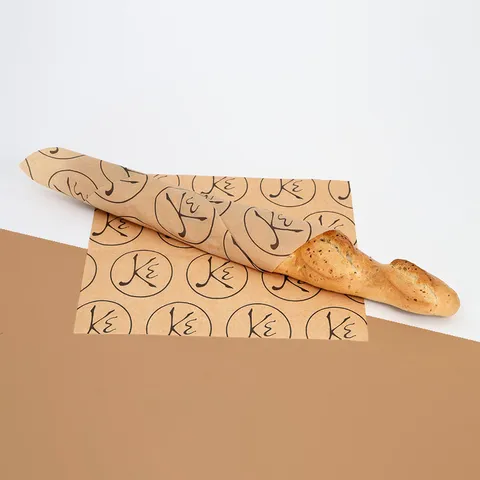 Custom Printed Greaseproof SheetsFrom £0.25 a sheet250 × 375 mm · 300 × 300 mm · 350 × 450 mmLogo wraps for hot foodSee this paper
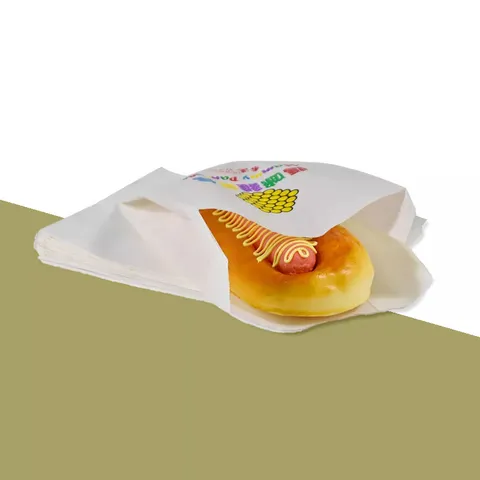 Burger Wrap PaperFrom £0.25 a sheet250 × 250 mm · 300 × 300 mm · 350 × 350 mmBurgers, chicken burgers and wrapsSee this paper
 Greaseproof Basket LinersFrom £0.25 a sheet250 × 250 mm · 300 × 300 mm · 300 × 400 mmChip baskets, trays and platesSee this paper
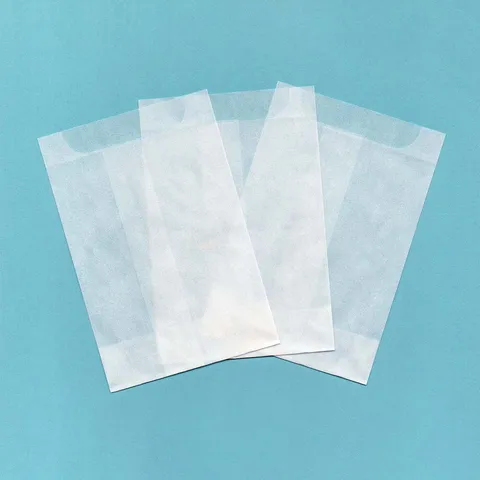 Glassine Paper BagsFrom £0.25 a bag90 × 140 mm · 120 × 170 mm · 140 × 190 mmBiscuits, pastries and sweetsSee this paper
The questions UK buyers ask before a first order. Type a word to filter the cards, or open one for the full answer.
No, 40 gsm is the usual kebab and burger wrap weight. Go to 45 gsm if the wrap carries a lot of sauce or sits in a delivery bag for more than twenty minutes.
Roughly the difference between a sheet of tissue and a sheet of ordinary copier paper.
Roughly the difference between a sheet of tissue and a sheet of ordinary copier paper. The 45 gsm sheet keeps a crease and feels crisp, while 35 gsm drapes and can spring open.
Most shops run 35 to 40 gsm for the inner sheet with a heavier outer.
Most shops run 35 to 40 gsm for the inner sheet with a heavier outer. If you wrap in a single sheet and tuck the ends, 45 gsm holds up better against steam and fat.
A 45 to 55 gsm sheet lies flat under a full tray and takes cutlery without tearing.
A 45 to 55 gsm sheet lies flat under a full tray and takes cutlery without tearing. Lighter sheets lift at the corners as the tray warms.
It costs more per sheet because there is more paper in it, and a carton is heavier to deliver.
It costs more per sheet because there is more paper in it, and a carton is heavier to deliver. The exact difference is given on a written quote; ask for both weights on one quote to compare.
Glassine is normally supplied at 30 to 40 gsm, because the smooth, glassy finish comes from pressing a light sheet hard.
Glassine is normally supplied at 30 to 40 gsm, because the smooth, glassy finish comes from pressing a light sheet hard. For a heavier bag, a plain greaseproof stock is the better route.
A hard crease opens the fibres slightly along the fold line, and fat gets through there before anywhere else.
A hard crease opens the fibres slightly along the fold line, and fat gets through there before anywhere else. A heavier sheet bends on a wider radius and the fibre stays closed.
On white stock below about 40 gsm, yes, a dark logo ghosts faintly through.
On white stock below about 40 gsm, yes, a dark logo ghosts faintly through. Kraft stock hides it far better at the same weight, and a repeat pattern hides it better than one large logo.
Not quite. Gsm is weight per square metre and thickness is measured in microns, but on greaseproof the two rise together closely enough that gsm is a reliable guide to how the sheet feels.
35 to 40 gsm is enough. The sandwich is cold, there is no hot fat to resist, and a lighter sheet folds tightly around a bloomer without bulking out the cabinet.
No match. Ask us on WhatsApp or call +44 7578 382054.
Name the paper, a size and a quantity, and attach a logo if you have one. A written price and a free design proof come back within one working day. Rather talk it through? Call +44 7578 382054 or message us on WhatsApp.