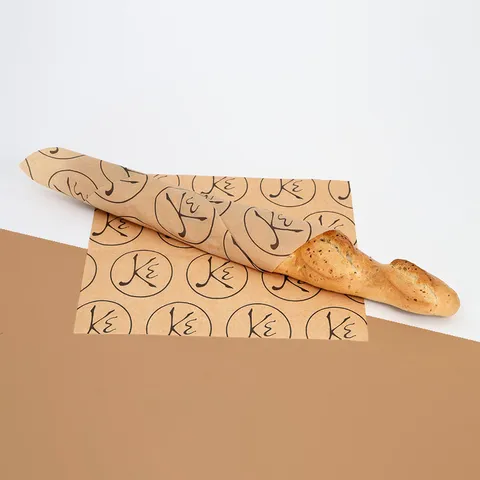
What printed paraffin paper is
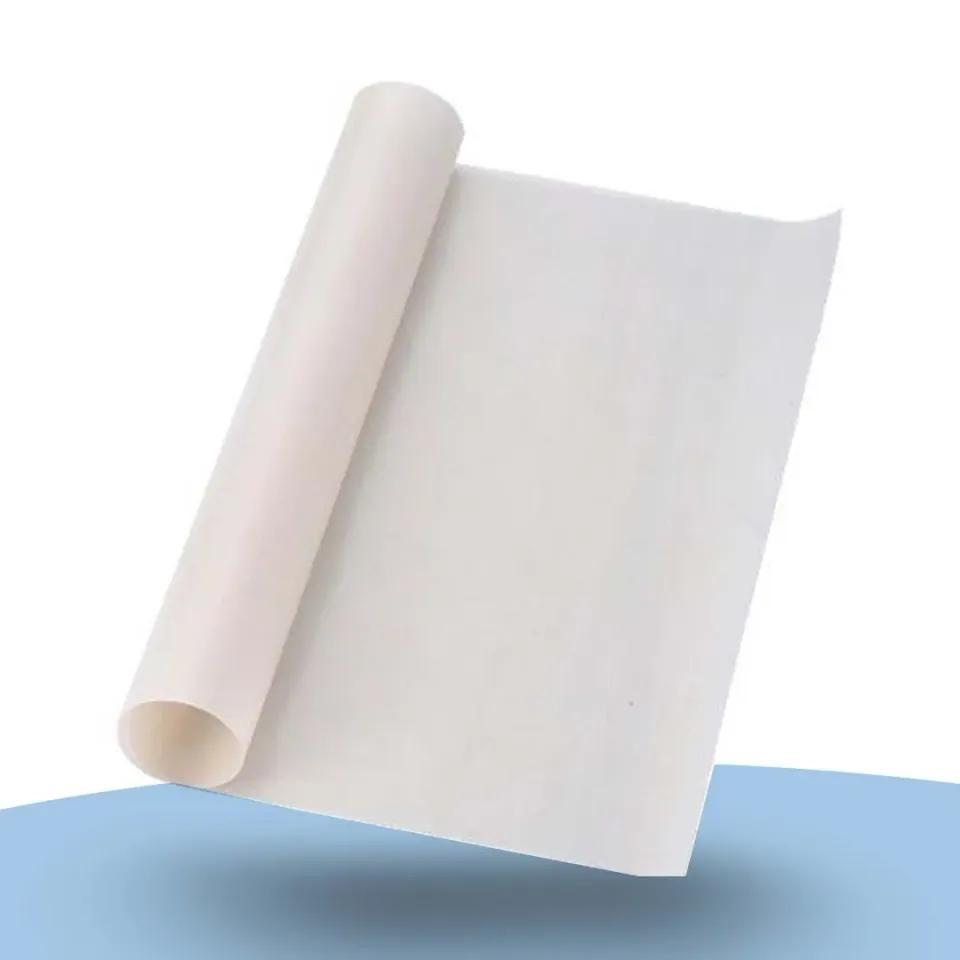
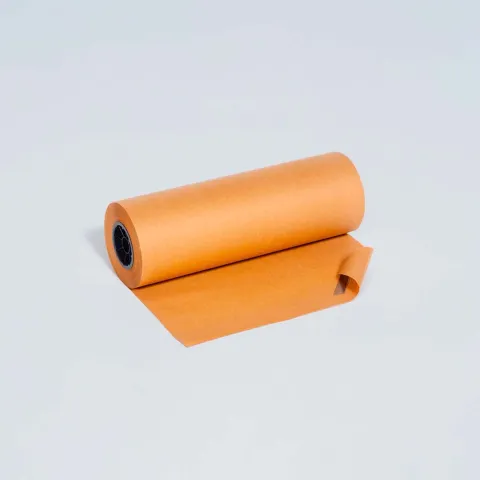
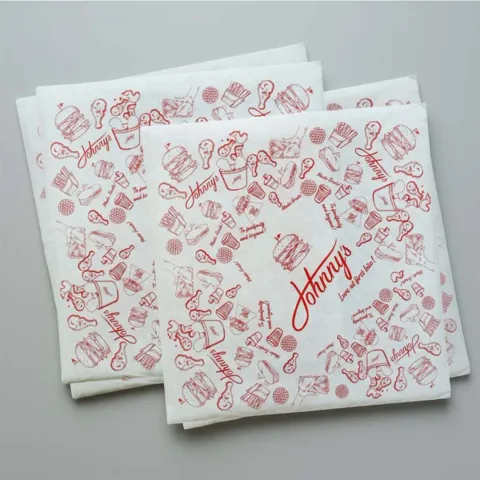
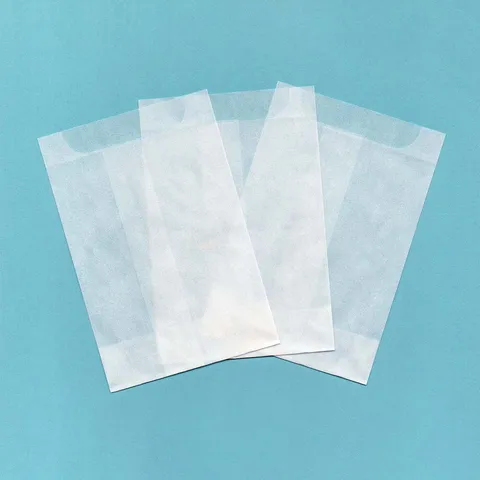
The three photos show unprinted samples of the stock. One is a white sheet curling off a short roll and one is a natural buff sheet. The third is a white sheet held over an orange board, where the grain shows through and gives away how thin the paper is.
Printed paraffin paper is that sheet with your artwork underneath the wax. The print goes on first, the paraffin film goes over it, and the design ends up sealed between the paper and the coating.
Cheese shops, farm shops, dairies and fudge makers buy it in cut sheets. It is the wrap you use when the paper is also the label a customer reads at home.
Why does paraffin paper peel clean off butter and fudge?
Paraffin sits on the surface as a continuous film rather than soaking into the fibres. Nothing sticky can get a grip on the paper itself, so a butter pat or a square of fudge comes away whole.
Dry wax paper releases well too, but a wet, heavy item can draw fibres off its face. Paraffin never does, which is why dairies wrap butter in it.
The film also stays supple in the chiller. A sheet folded round a wedge at 4°C unfolds without cracking the next morning.
Hold it up to the light and the sheet looks glassy. That is the paraffin, and it is the easiest way to tell it from dry wax in the hand.
Which printed paraffin sheet size fits a cheese wedge or a butter pat?
Pick the sheet by the largest item on the counter, with enough to fold under twice and close the ends.
| Typical size | The usual job |
|---|
| 200 × 200 mm | Butter pats, fudge and tablet squares, single cheese portions |
|---|
| 250 × 270 mm | Cheese wedges to about 300 g, blocks of fudge, sliced cooked meats |
|---|
| 300 × 300 mm | Larger wedges, whole small cheeses, sausages by the half dozen |
|---|
| 300 × 400 mm | Whole small rounds, terrines, cooked meats by the kilo |
|---|
Most cheese counters settle on the 250 × 270 mm sheet. If your wedges run bigger, the chart of sheet and roll sizes explains how to measure the next size up.
Paraffin against dry wax: the sheet with the glassier face
Both are waxed papers, and both are printed before coating. The difference is how much wax stays on the surface.
Dry wax is pressed into the sheet and the face still feels like paper. It costs less, creases sharply and suits sandwiches eaten within the hour.
Paraffin leaves a film on top. It feels slicker, holds moisture back for days, and releases wet food cleanly. It does not take a sharp crease, so close it with a fold-under or a sticker.
If your counter mostly does sandwiches, custom wax paper for sandwiches is the cheaper and better sheet. If it does cheese and butter, stay on this page.
How does printed paraffin paper behave in a chilled display?
Well, for days rather than hours. The film keeps the fridge smell off the cheese and the cheese moisture in the parcel, so the cut face does not go hard and dark.
Condensation is the thing to watch. A wedge wrapped straight from a warm cutting board sweats inside the sheet. Chill the wedge, then wrap it.
Grease is no trouble at chiller temperature. A fatty salami or a block of butter leaves no mark on the outside. Above about 60°C the film softens, so keep paraffin sheets away from the toastie press and the hot cabinet.
Printing on paraffin: ink first, wax after
Because the artwork is sealed under the film, it cannot rub onto the food and it cannot be scratched off at the counter. A few notes on the artwork itself.
- Supply a vector logo; the film blurs fine detail, so keep type at 8 pt or larger and rules at 0.75 pt or heavier.
- A step-and-repeat pattern shows part of the design however the sheet is folded; a single centred logo needs the wrap folded the same way every time.
- Reversed type (white out of a colour) fills in under paraffin; print the colour, not the reverse.
- Leave 10 mm clear at the sheet edge so the fold and the tape land on plain paper.
- On kraft, every colour shifts warmer and darker; the proof shows the shift before anything prints.
The guide to printing on greaseproof and waxed paper goes through plates, trapping and ink weights.
Can printed paraffin paper carry a full-colour label design?
It can carry up to four colours, and paraffin shows colour better than dry wax because the film is clear rather than cloudy. A name, a flavour line, a weight panel and a small illustration all fit on a 250 × 270 mm sheet.
Even so, we pull Pantone solid-coated matches a shade deeper than the swatch. Every ink reads a little lighter through the film, and the proof shows the corrected colour.
If the sheet is doing the job of a label, keep the important text in one block near a corner. The customer unwraps from the middle and the corner stays flat and readable.
Try the layout on a sheet in Design Your Custom Printed Paraffin Paper and send it with the quote.
Farm shop and cheese counter uses
A farm shop wraps its own butter in a 200 × 200 mm printed sheet, folded into a neat brick with the name on top. The paper is the packaging; there is no box.
A cheese counter uses the 250 × 270 mm sheet for wedges and sells the whole small round in the 300 × 400 mm. Both leave the shop with the same name and phone number on the outside.
Fudge and tablet makers lay slabs on paraffin sheets to set, cut on them, then wrap the squares in the same paper. The sugar never grabs the sheet.
Delis wrap sliced cooked meats in the 250 × 270 mm sheet with a fold-under. A wet slice of ham will not soak through on the way home.
Mistakes to avoid with printed paraffin sheets
Wrapping warm. Butter or fudge still soft from the kitchen sweats inside the film and the surface goes patchy. Chill first.
Expecting a crease. Paraffin will not hold a sharp fold the way greaseproof does, so a parcel that relies on creases alone will spring open in the bag.
Fine white type. Reversed lettering under the film closes up; keep lettering positive and dark.
Storing by the ovens. The film softens in a warm room and the sheets cling together in the ream.
How to order printed paraffin paper
- Choose the size and quantity (1,000 sheets of one size is the minimum) and say white or kraft.
- Send a vector logo or a full label layout and say how many colours you want.
- We reply with a written quote within one working day and a free proof showing the colours as they will look under the film. From £0.25 a sheet is where sheet prices begin, and the quote states the exact figure for your size.
- Ask for as many proof changes as you need, then approve.
- Allow 4 to 6 working days for printing and coating, then 2 to 3 working days for free tracked delivery to a UK mainland address.
- Settle the invoice after approval. If a carton arrives damaged or the print is wrong, send photos within 10 days and we reprint or refund.
Begin with the printed paraffin paper quote form; add a photo of the item you wrap if you are unsure about size.