Where does the logo print on a printed loaf tin liner?
On the outer face of the two long walls. The pleated ends and the base are left plain because folds break up a design.
Printed loaf tin liners are the pleated greaseproof cups a bakery bakes in, with the logo printed on the outer wall. The loaf bakes, cools and sells in the one liner, so the name is on it from the oven to the customer's kitchen.
From £0.25 a liner. Written quote in one working day and a free design proof; the exact number depends on size, ink count and quantity.
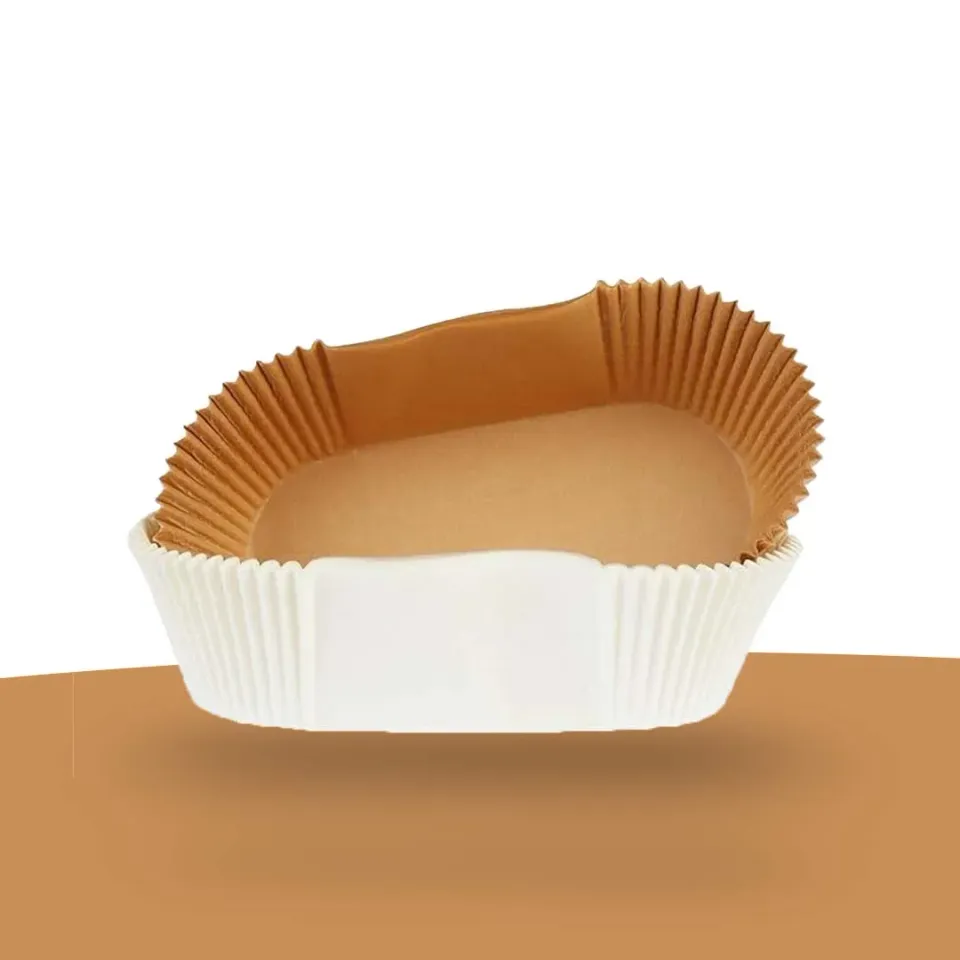
From £0.25 a liner. Exact price on the written quote.
| Form | Pre-formed loaf cup, pleated walls, print on the outer face |
|---|---|
| Base sheet | Natural kraft or bleached white greaseproof |
| Typical weight | About 40–50 gsm |
| 1–4 food-safe soy and water-based ink colours, Pantone solid-coated matches | |
| Heat | Oven-safe grades to about 200°C (typical), print included |
| Typical sizes (base) | Mini 145 × 75 mm to Large 250 × 140 mm, four loaf sizes |
A printed loaf tin liner is a pre-formed greaseproof cup with a design printed on the outside face. It lines the tin, takes the heat of the bake and then works as the retail packaging. Four loaf sizes in kraft or white.
| Format | Typical size | Typical use |
|---|---|---|
| Liner | Mini (145 × 75 mm) | Mini loaf, gift size |
| Liner | 1 lb (170 × 95 mm) | 1 lb loaf tin |
| Liner | 2 lb (230 × 130 mm) | 2 lb loaf tin |
| Liner | Large (250 × 140 mm) | Large and farmhouse tins |
The four sizes above are the usual picks; any other size is a custom cut, so ask on the quote. Full sheet and roll size chart.
Pick one of this paper's photos, drop your logo on it and send the mock along with your quote request.
Upload a logo and it appears on this sheet
A bakery that sells a lemon drizzle in a plain liner sells a cake. The same cake in a liner with the bakery name on the long wall sells the shop as well, and it gets carried through town and put on a kitchen table.
The photos show the plain stock we print on: a white cup nested inside a kraft one, both with pleated short ends, and a tall stack of kraft liners ready for a bench. The print goes on the smooth outer wall of exactly those cups.
Buyers are high-street bakeries, café kitchens that bake their own, farm shops with a cake counter, and makers who sell at markets and need the packaging to do the talking.
It is also the cheapest branded packaging a bakery can run. There is no box to fold and no label to stick; the liner was going in the tin anyway, and the print rides along for the cost of the ink.
The liner has two long walls, two pleated short ends and a base. Only the long walls are worth printing; the pleats fold the design and the base is hidden under the loaf.
| Zone | What prints well | What to avoid |
|---|---|---|
| Long wall, centre | Logo, bakery name, a short strapline | Fine type under 8 pt, tight borders |
| Long wall, upper band | A repeat of a small mark or a colour stripe | Anything that must stay level with the rim |
| Pleated short ends | A solid tint or nothing | Logos and words; the pleats break them up |
| Base | Leave plain | Any print; it is never seen and sits under the crumb |
The long wall on a 2 lb liner gives you a panel of roughly 200 × 50 mm, which is plenty for a logo and the shop name at a readable size.
Kraft is brown, so every ink shifts towards it. Black, dark brown, deep red, navy and bottle green stay strong. Yellow, pale blue and pastels sink into the paper and come out muddy.
One colour on kraft is the honest look for a bakery and the one we push first. It costs least, proofs fastest and never fights the loaf for attention.
If your brand colour is light, print on white stock instead. White shows a Pantone match as the swatch intends, and a two-colour logo keeps its contrast.
A single logo, centred on each long wall, is the usual answer for a loaf liner. The wall is a fixed panel, the liner is never torn or folded further, so the mark lands in the same spot every time.
A step-and-repeat suits a small mark or a monogram scattered across the wall. It looks busier and hides any small misalignment in the forming, which matters more on the mini size.
Our opinion: one logo per wall on the 1 lb and 2 lb, a light repeat on the mini, where the wall is too short for a name at a sensible size.
The proof is free and edits are unlimited, but a clean file makes the first proof the last one.
Yes. The inks are food-safe soy and water-based, dried onto the paper before the cup is formed, and they go through a cake bake at 160 to 180°C without lifting or changing shade.
Heat does brown the paper a touch, and on white that shifts the background a shade warmer. The proof shows the print on unbaked stock, so allow for that when you judge a pale colour.
The print is on the outside face. It never touches the batter or the crumb, and the inside of the cup is plain greaseproof.
The printed liner does most of the packaging job, but a loaf still needs covering for the counter or a market table.
A wider range of bakery wrap, bags and sheets sits in the full list of greaseproof papers if you want the band or the sheet to match.
Printing the pleated ends. The forming crushes the paper into tight folds and any logo there turns into stripes. Keep the short ends plain or give them a flat tint.
Approving a proof without checking the mini size. A design that fits a 2 lb wall at 50 mm tall will not fit a mini wall at 35 mm, and the type ends up unreadable.
Choosing a pastel on kraft because it matched the shop sign. It will not match on brown paper. Go darker or go to white stock.
Ordering one size when you bake three. Put all three on one job and the setup is spread over the whole order.
You send the sizes, quantities, stock colour and artwork, and a written quote comes back within one working day. The minimum is 1,000 liners per size, and the price per liner drops as the run grows.
Approve the quote and a free design proof follows, showing the logo on the long wall of each size you ordered. Ask for changes until it is right.
Approve the proof and printing and forming take 4–6 working days. Cartons then go out on free tracked delivery to any UK mainland address, and payment is by invoice after approval. For the plain cups without print, see the unprinted loaf tin liners in the same sizes.
The questions UK buyers ask before a first order. Type a word to filter the cards, or open one for the full answer.
On the outer face of the two long walls. The pleated ends and the base are left plain because folds break up a design.
Yes. The food-safe inks are dried onto the paper before forming and go through a normal cake bake without lifting or fading.
Dark inks: black, dark brown, deep red, navy and bottle green.
Dark inks: black, dark brown, deep red, navy and bottle green. Pastels and pale yellows sink into the brown and look muddy.
A short line of text fits on the long wall, but a full ingredients list is better on a sticker or band so it can change with the recipe.
Yes. Each size is its own form and can carry its own artwork, though one design across all sizes keeps the setup simpler.
No. The print is on the outside wall only and the inside of the cup is plain greaseproof.
Not for the branding. A clear bag or a windowed box keeps the loaf fresh and lets the printed wall show through.
A single centred logo on each long wall for the 1 lb and 2 lb sizes.
A single centred logo on each long wall for the 1 lb and 2 lb sizes. A small repeat suits the mini, where the wall is too short for a name.
A vector PDF, AI or SVG is best. A PNG at least 2,000 pixels wide also works for a simple logo.
Yes, to a Pantone solid-coated reference. On white stock the match prints true; on kraft the brown base shifts it darker.
One thousand liners per size. The plate cost is shared across the run, so a larger quantity or several sizes on one job costs less per liner.
Usually 4–6 working days to print and form, plus 2–3 for delivery.
Usually 4–6 working days to print and form, plus 2–3 for delivery. The production clock starts when you approve the proof, and delivery is free and tracked to any UK mainland address.
No match. Ask us on WhatsApp or call +44 7578 382054.
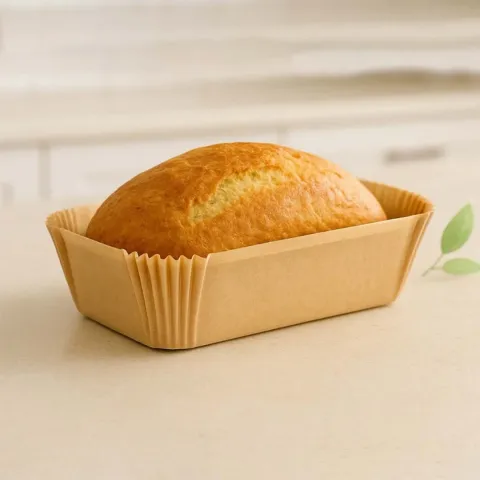 Loaf Tin LinersFrom £0.25 a linerMini (145 × 75 mm) · 1 lb (170 × 95 mm) · 2 lb (230 × 130 mm)Bread, fruit loaf and banana breadSee this paper
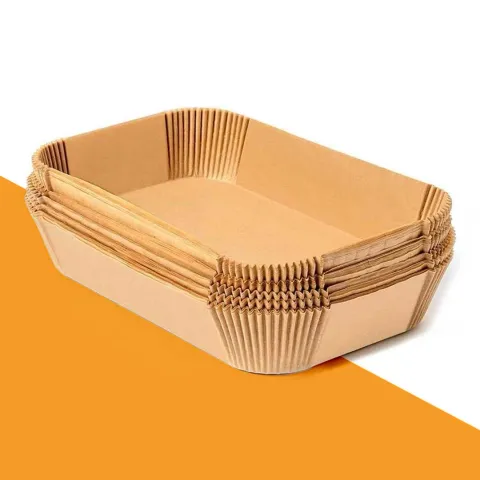 Tray and Air Fryer LinersFrom £0.25 a liner160 × 160 mm · 200 × 200 mm · 265 × 325 mmBaking trays, gastronorm pans and air fryersSee this paper
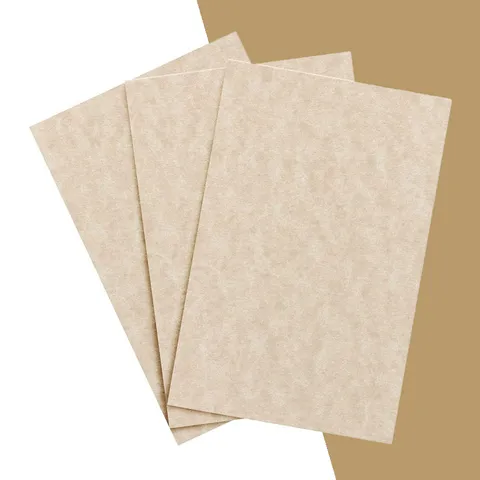 Textured Greaseproof PaperFrom £0.25 a sheet200 × 200 mm · 300 × 300 mm · 300 × 400 mmNatural-look wraps and linersSee this paper
 Glassine Paper BagsFrom £0.25 a bag90 × 140 mm · 120 × 170 mm · 140 × 190 mmBiscuits, pastries and sweetsSee this paper
Name the paper, a size and a quantity, and attach a logo if you have one. A written price and a free design proof come back within one working day. Rather talk it through? Call +44 7578 382054 or message us on WhatsApp.