What custom wax paper is
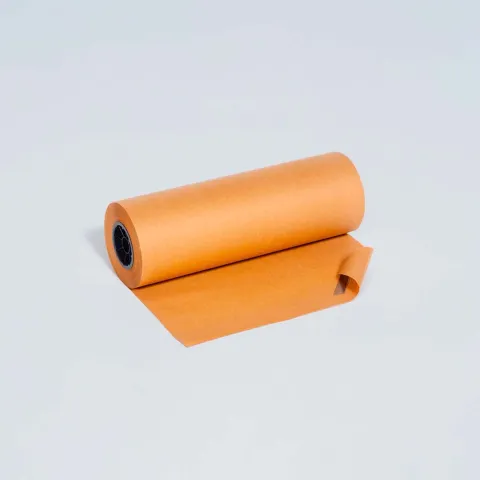
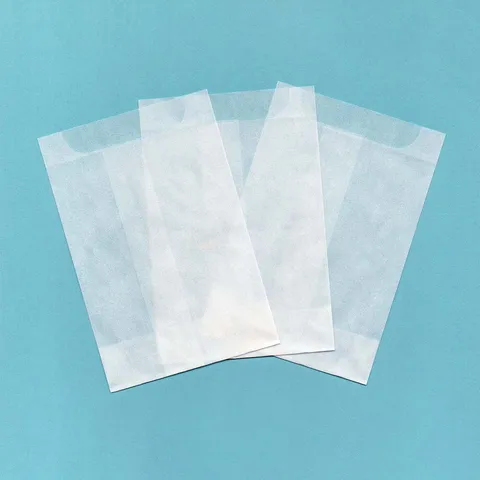
Wax paper begins as a thin, smooth base sheet. It passes through a bath of melted wax that soaks into the fibres and sets as it cools. What comes out is the sheet in the second photo: white, a touch translucent at the edge, with a soft sheen rather than a gloss.
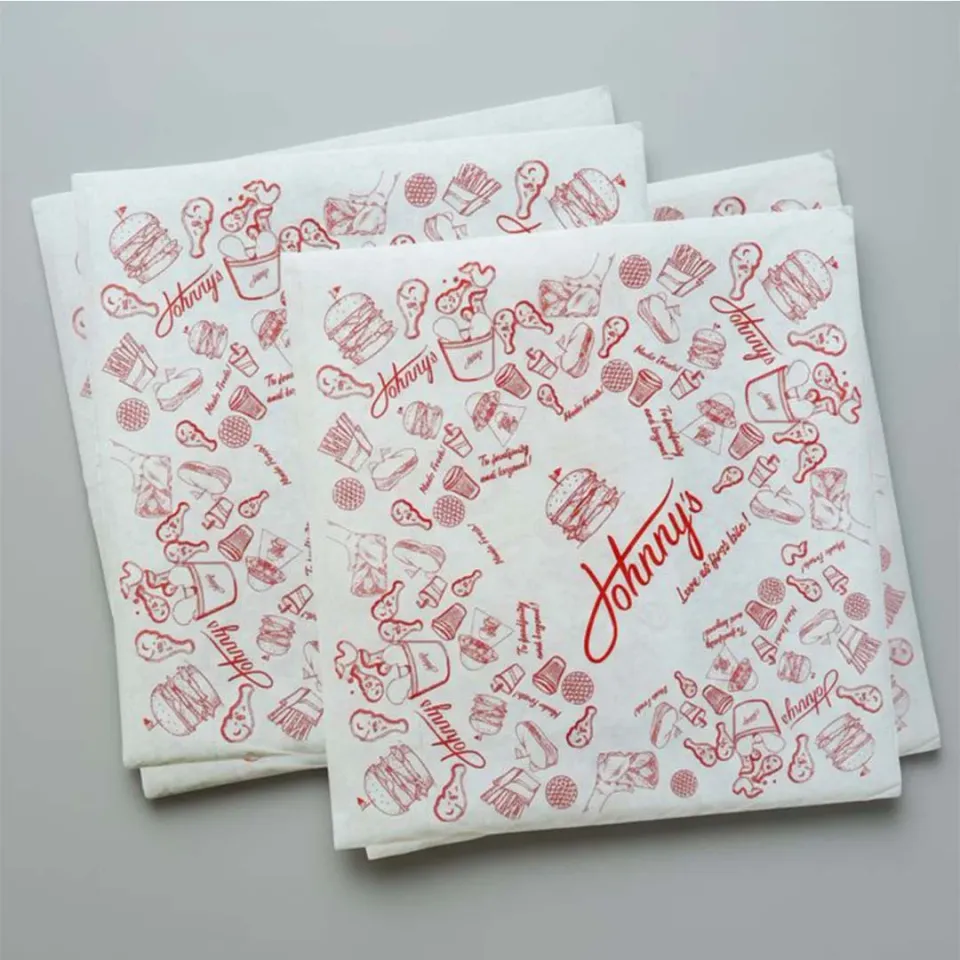
Custom wax paper is the same sheet with your artwork printed on it before waxing. The first photo shows a stack of folded sheets carrying a red one-colour scatter of small food drawings around a central mark.
Sandwich shops, bakeries, fudge makers and cheese counters are the main UK buyers. Soap makers order it too, because wax paper keeps a curing bar from sweating into its label.
How does dry wax paper cope with grease, damp and heat?
The wax does two jobs. It slows water and light oil passing through the sheet, and it stops sticky food gripping the face. An iced bun lifts off clean. A piece of fudge does not weld itself to the wrap.
It is a cold-food paper. Dry wax softens at about 80°C, so a sheet under a toasted sandwich goes tacky and can leave a faint film. Anything served hot belongs in a greaseproof sheet instead.
Wax paper folds easily but will not hold a sharp crease the way greaseproof does. A sandwich parcel stays shut with a tuck under, not a fold alone.
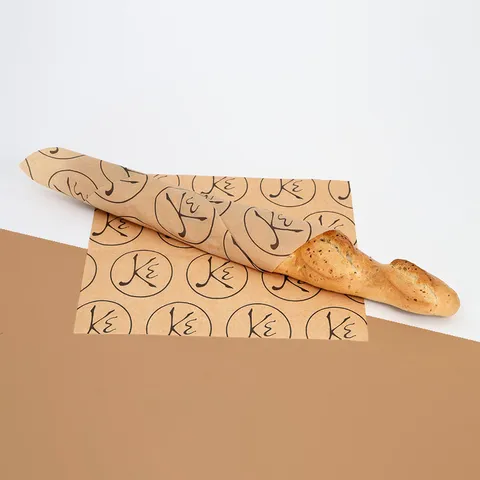
It also traps steam. Wrap a warm sausage roll in it and the inside fogs within a minute. For a cold baguette that is fine; for a hot one it is wrong.
Our guide to greaseproof paper versus wax paper covers where each sheet wins.
Which wax paper size suits a sandwich, a slab of fudge or a cheese wedge?
Wax paper is nearly always a pick-up sheet or a wrap for a single item. Size it to the item plus enough to fold over twice, and no more.
| Typical size | The usual job |
|---|
| 150 × 270 mm | Pick-up sheets for one bun, flapjack or doughnut; bars of fudge and tablet |
|---|
| 250 × 270 mm | Bagels, sandwich halves, cheese wedges, small cake box liners |
|---|
| 300 × 300 mm (about 12 in square) | Whole sandwiches and baguettes, interleaving burger patties, soap bars |
|---|
| 375 × 375 mm | Large cake box liners, platter covers, wraps for a full slab of fudge |
|---|
Most bakeries keep two: the 150 × 270 mm for the counter and the 300 × 300 mm for the box. Any other size is a custom cut, and the sheet and roll size chart shows how to measure for one.
Why does a soft cheese mark wax paper, and what stops it?
A wrapped cheese keeps breathing. Moisture off a soft cheese condenses against a sheet that will not let it all out, pools at the lowest fold, then shows as a damp patch on the outside.
Wax paper still beats cling film here, because dry wax is not a sealed skin. Some moisture passes. But a very wet cheese, or one wrapped while still at room temperature, will mark the paper by the next morning.
Three habits help. Wrap the wedge cold. Ask for the heavier base so there is more fibre to take up moisture. And change the paper every time the wedge goes back in the chiller, not once a week.
Hard cheeses give no trouble. A wedge of mature cheddar in printed wax paper looks right on a farm shop counter and stays dry for days.
Weight and finish: dry wax as standard
Dry wax is the usual finish for custom wax paper. The wax is driven into the sheet and leaves a matt, slightly slippery face that prints cleanly and folds without flaking.
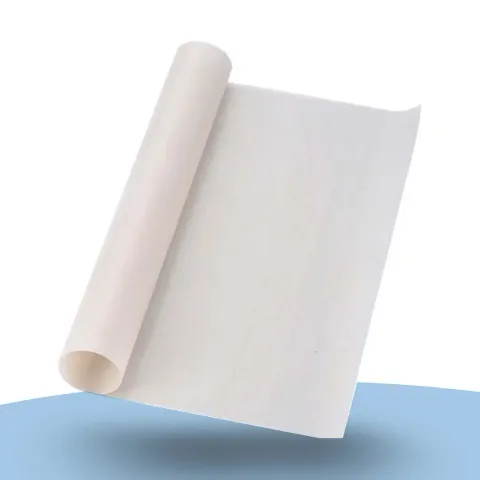
- Dry wax: the stock in both photos; matt face, folds well, takes print, suits sandwiches, fudge, cheese and soap.
- Wet wax: a heavier coat left on the surface; glossier, stiffer, holds moisture back longer, better for sticky sweets and wet deli items.
- Either coat on a 35–40 gsm base: pick-up sheets and interleaving.
- Either coat on a 40–45 gsm base: wraps that travel home and box liners that get lifted out with the cake.
Not sure which coat you need? Ask for a plain sample of each on the quote; the difference is obvious once you hold them side by side.
Printing under the wax: one colour does the work
The ink goes down before the wax, so the design sits sealed beneath the coat. That is why the red scatter in the first photo has that faintly muted look, as though you were seeing it through frosted glass. Buyers who know wax paper want exactly that look.
One colour is the classic choice. Red, black, navy or bottle green on white gives a bakery or sweet shop wrap its character with a single ink. A scatter layout means a sandwich folded any which way still shows part of the design.
Keep type at 8 pt or more and rules no finer than 0.75 pt, because the wax coat softens edges a little and hairline detail blurs.
Inks are food-safe soy or water-based. Under the wax they cannot rub off onto chocolate or icing, which is the first thing a fudge maker asks.
Lay out a scatter of your own in Design Your Custom Wax Paper before you ask for a quote.
Can custom wax paper take two colours or a Pantone match?
Yes, up to four colours, though two is usually the sensible limit. Each colour is a separate ink laid down before waxing, and the wax mutes every one of them. Two dark inks stay crisp. Four pale tints come out washed out and flat.
A two-colour job that works well is a dark scatter with a second colour on the centre mark only. The sheet reads as busy from across the shop and clean up close.
We match Pantone solid-coated references and show the result on the proof as it will look under wax, not on bare white paper.
Fudge, tablet and the pick-up sheet at the counter
Sweet makers buy wax paper more than anyone. A 150 × 270 mm sheet wraps a bar of fudge with a twist at each end. The wax stops the sugar bleeding into the paper on a warm afternoon.
Caramels and toffee are cut on a wax sheet, interleaved with wax, and boxed between wax. Nothing else lets a soft caramel go into a box and come out in one piece.
Bakeries buy the same small sheet to serve as a pick-up. The counter hand lifts a doughnut with the printed sheet, folds it under, and the customer walks out with the logo in their hand.
Soap makers fold the 300 × 300 mm sheet round a bar and close it with a band. There is a separate soap wrapping paper for makers if the bar is the main job.
Mistakes to avoid with wax paper in a bakery or deli
The first is using it hot. A wax sheet under a toastie or in a heated display cabinet goes tacky and transfers wax to the food.
The second is wrapping warm bakes. A cookie straight off the tray fogs the sheet and the icing slides. Give it ten minutes on a rack first.
The third is printing a pale colour and expecting it to pop. Wax dulls every ink, so pick a shade darker than you think you need.
The fourth is keeping the open ream beside the oven. Sheets that have softened into a block cannot be separated and have to go in the bin.
How to order custom wax paper
- Pick the size, the coat (dry wax unless you say otherwise) and the quantity. The minimum is 1,000 sheets of one size.
- Send a vector logo and tell us whether you want a scatter, a centre mark or both, in one or two colours.
- You get a written quote within one working day and a free proof showing the ink as it looks under wax. From £0.25 a sheet is the guide price; your quote gives the exact figure.
- Change the proof as often as you like, then approve it.
- Printing and waxing take 4 to 6 working days after approval, with free tracked delivery to UK mainland addresses in 2 to 3 working days.
- Pay the invoice once quote and proof are approved. A misprint or a crushed carton, photographed and reported within 10 days, is reprinted or refunded.
Start on the custom wax paper quote form and tell us what you wrap; we will suggest the size.