Glassine on a core for the wrapping bench and the slicer
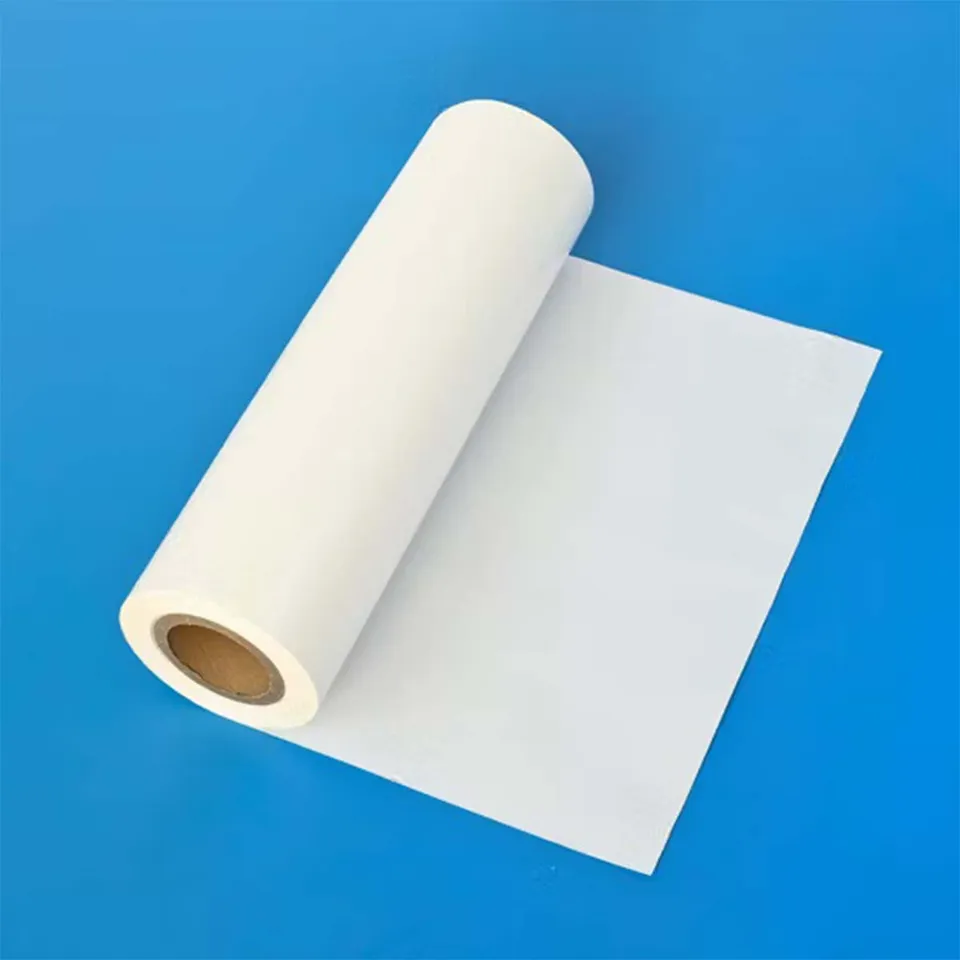
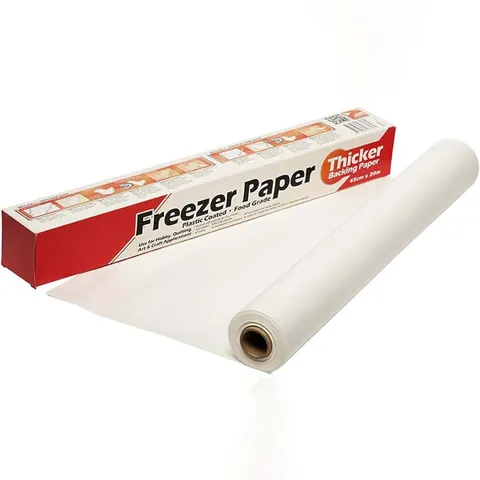
The first photo shows a white roll on a brown card core, with a length pulled out across a blue bench. The paper lies flat as soon as it leaves the core and the blue shows through it, which is the translucency a chocolatier wants in a box liner.
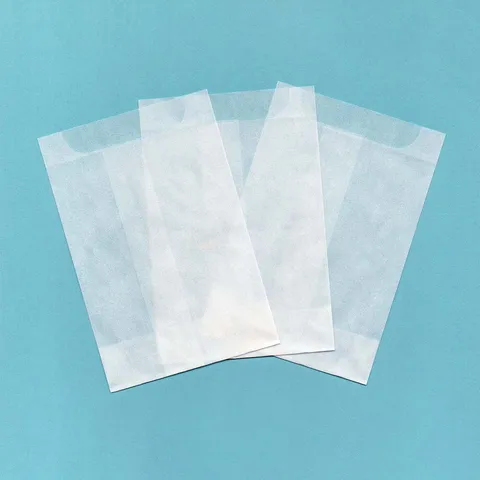
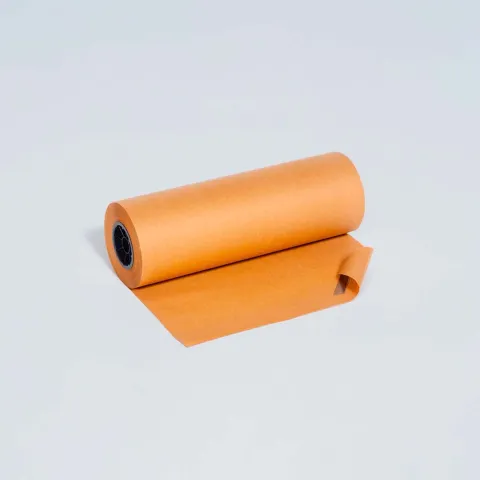
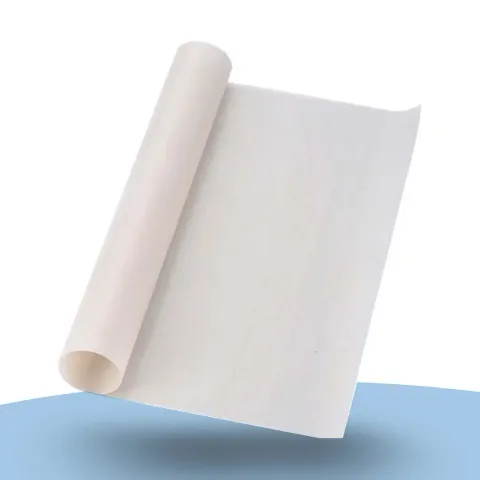
The second photo is a narrower roll with a smooth, slightly glossy face. The third shows three rolls together, two white and one with a cream tint, and it is the closest match to how the cartons arrive.
What is a glassine paper roll used for?
Mostly for jobs where the paper goes between or around things rather than under them. A deli pulls a short length to interleave sliced ham so the slices lift apart cleanly. A chocolatier lines a box with it so cocoa butter does not bloom onto the card. A fudge maker wraps a 500 g block in it before the outer label goes on.
Coffee roasters use a narrow roll to tear inner sheets for their retail bags. Bakeries lay it under traybakes that are being cut and portioned, because the knife does not drag on it.
The common thread is cold or ambient food, a smooth release and a sheet thin enough that a customer can see what is wrapped. Bakeries that sell single pastries usually want printed glassine bags instead.
Which glassine roll width suits a deli counter or a packing bench?
Match the width to the widest item you wrap, plus about 50 mm each side for the fold. These four combinations are the ones we quote most.
| Typical roll | Suits | Where it lives |
|---|
| 300 mm × 150 m | Interleaving sliced meats and cheese, tearing inner sheets for coffee bags | Counter dispenser beside the slicer |
|---|
| 375 mm × 150 m | Wrapping 500 g fudge blocks, lining 250 × 250 mm chocolate boxes | Dispenser at the end of the packing bench |
|---|
| 450 mm × 300 m | Lining full-size chocolate trays, wrapping loaf cakes, sheeting out bars | Wall bracket above a long bench |
|---|
| 600 mm × 300 m | Lining the base of cake boxes, cutting down to custom sheets | Floor stand or a slitting station |
|---|
The 150 m rolls fit most counter dispensers; the 300 m rolls are heavier and sit better on a bracket. If you only ever cut sheets, say so on the quote and we can supply the roll already cut to your size.
How does glassine from a roll cope with grease, heat and damp?
Grease is its strength. Butter from shortbread, oil from a dark roast and cocoa butter all stay on the face of the sheet rather than soaking in, so the paper under the interleaf stays dry.
Heat is the limit. Glassine has no coating to melt, but it carries no barrier to steam, so a warm item wrapped in it goes soft and the paper wrinkles. Keep it to cold and ambient work.
Damp is the other limit. A wet cheese or a cut cake in a fridge for more than a day will pass moisture through the sheet. For that job use wax or paraffin paper from the range, which carries a moisture barrier glassine does not.
Printing a repeat along the roll
A roll is printed as a step-and-repeat, which means one plate prints your mark over and over down the length. Because you tear the paper anywhere, the repeat is set loose, usually a logo every 100 mm, so at least one full mark lands on every length you pull.
Diagonal or scattered repeats hide the join better than a straight grid. One colour on white glassine is the usual pick; two colours work if the second is a thin outline or a line of text, not a solid fill.
Pale inks vanish once brown food is behind them. Go darker than you think: a deep green rather than a mint, a navy rather than a sky blue.
Weight, tint and the feel of the sheet
Roll glassine sits at about 30 to 40 gsm. Thinner rolls tear more cleanly on a dispenser bar; the 40 gsm end is better for lining trays, because it drapes less and lies flat in the corners.
- White: the standard tint, shows ink truest and reads cleanest behind pale fillings
- Cream: a warm tint that softens a brown or dark green print and suits a farm shop deli
- Smooth face both sides: nothing to orient, so staff cannot load the roll the wrong way round
- Slight gloss and a cool hand: the cue that tells a customer the paper is glassine, not a coated wrap
If you are unsure which weight you need, ask for a sample of each on the quote and tear both on your own dispenser.
Is one roll really enough to start?
Yes. The minimum order on this page is a single roll, which is why a small deli or a one-person chocolate kitchen can try printed glassine without committing to a pallet.
A 300 mm × 150 m roll pulled at about 250 mm a time gives roughly 600 interleaves, which is a few weeks at a quiet counter. The 300 m rolls suit a bench that lines boxes all day.
Rolls are priced by the roll on the quote, and a second roll in the same design is simply added as another line.
Mistakes to avoid when moving from sheets to rolls
Buying a width to match the item exactly. A 300 mm block in 300 mm paper leaves nothing to fold, so the wrap gapes at the ends. Add the fold allowance before you choose.
Loading the roll with too little drag. Glassine is slippery and unwinds under its own weight, so a dispenser without a brake drops loops of paper onto the floor. Tighten the bar or add a felt pad.
Using the roll for warm cheese boards or hot pastries. It will not fail, but it will go soft and look tired on the counter. The greaseproof versus wax paper guide explains which sheet takes heat and which takes damp.
How to order glassine paper rolls
- Tell us the width and length you want, or describe the item and the bench and we will suggest one from the table.
- Choose white or cream and say whether the roll is plain or printed; plain rolls need no artwork.
- For a printed roll, send your logo as a vector file and tell us the repeat spacing you have in mind.
- A written quote arrives within one working day, priced by the roll.
- Approve the quote, check the free proof showing the repeat across a sample length, and ask for any changes.
- Printed rolls are made in 4 to 6 working days, then delivered free and tracked to UK mainland addresses in 2 to 3 working days.
Damage or a misprint, reported with photos within 10 days, is reprinted or refunded. The quote form for glassine rolls takes the width, the length and your file.