Will paraffin paper rolls fit a deli counter dispenser?
Yes, provided the roll width matches the bar. Tell us your dispenser's bar width and core size on the quote and we cut the roll to suit.
Paraffin paper rolls are long lengths of paraffin-coated paper wound on a core, torn off at the counter to wrap meat, fish, cheese and cooked meats. Printed with a repeat of your logo along the length, one roll feeds a dispenser for weeks.
From £0.25 a sheet; rolls are priced by the roll on the quote. Written quote in one working day and a free design proof; the exact number depends on size, ink count and quantity.
From £0.25 a sheet; rolls priced by the roll. Exact price on the written quote.
| Base sheet | Kraft, white or orange-tinted paper, paraffin coated |
|---|---|
| Typical weight | About 40–55 gsm base, plus the coating |
| Coating | Paraffin wax, one or both faces; holds back moisture and light grease |
| Heat | Cold and counter use only; paraffin softens at about 60°C |
| 1–2 food-safe colours in a continuous repeat along the roll | |
| Roll | Wound on a rigid core; sold singly, 1 roll minimum, priced by the roll on the quote |
A paraffin paper roll is a wide reel of paper coated on one or both faces with paraffin wax. Moisture and light grease stay on the surface at counter temperature. It is sold by width and length, such as 450 mm by 300 metres, and tears off a dispenser bar a sheet at a time. Printed rolls carry a repeat so every tear-off shows your mark.
| Format | Typical size | Typical use |
|---|---|---|
| Roll | 300 mm × 200 m | Counter roll, cheese |
| Roll | 375 mm × 200 m | Deli counter |
| Roll | 450 mm × 300 m | Butcher's counter |
| Roll | 600 mm × 300 m | Production line |
The four sizes above are the usual picks; any other size is a custom cut, so ask on the quote. Full sheet and roll size chart.
Pick one of this paper's photos, drop your logo on it and send the mock along with your quote request.
Upload a logo and it appears on this sheet
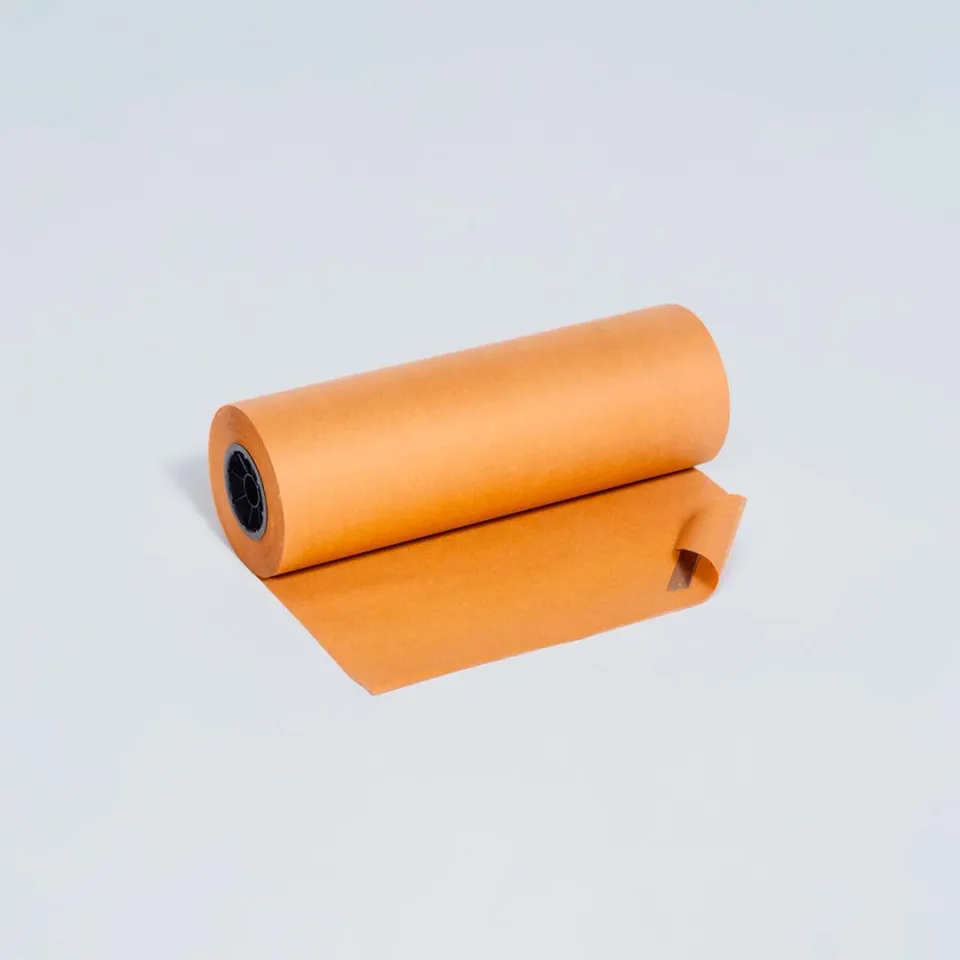
The photos show the stock plainly. One is an orange-tinted roll on a black core with a length pulled out flat, the way it comes off a counter dispenser. Another shows two tall rolls standing side by side, one natural kraft and one bright white.
Paraffin paper is a base sheet carrying a film of paraffin wax. The coating gives it a dull, slightly waxy feel and a face that water beads on rather than soaks into.
Butchers, fishmongers, delis and cheese shops buy it by the roll. A roll never runs out halfway through a Saturday the way a ream of sheets can. Fudge makers and bakeries take the narrower rolls for bulk wrapping.
Raw meat weeps, fish is wet, and cheese sweats. Paraffin paper copes with all three at counter temperature. The wax keeps liquid off the outside of the parcel for as long as it takes to get it home.
It is a cold paper. The coating softens at about 60°C, lower than a fresh cup of tea. Nothing hot goes in it and it never sits under a lamp.
Light grease is fine; hot fat is not. Half a kilo of mince wraps cleanly. A chicken straight from the rotisserie would soften the wax and leave a film on the skin.
Folded tight round a joint, the paper holds its shape well enough to stack in a display. A strip of tape on the last fold keeps it closed in the carrier bag.
For joints going into the freezer rather than the fridge, freezer paper for butchers is the heavier stock to look at.
Match the roll to the dispenser you already own and to the widest item you wrap. A roll too wide for the bar will not tear straight; one too narrow wastes a second sheet on every large cut.
| Typical roll | Counter and job |
|---|---|
| 300 mm × 200 m | Sweet counters, bakery wrapping, small deli items, cheese portions |
| 375 mm × 200 m | Cheese counters, sandwich shops, chops and sausages |
| 450 mm × 300 m | The usual butcher's roll: steaks, whole chickens, fish fillets |
| 600 mm × 300 m | Whole fish, large joints, briskets, whole small cheeses |
Measure the bar on your dispenser in millimetres before you order. The size chart for sheets and rolls lists what else to check, including the core.
Kraft is the butcher's pick. The brown hides the odd smear, prints well in one dark colour, and looks right under a chalkboard of prices.
White is the fishmonger's and cheese shop's pick. It shows the item cleanly through a half-open fold and takes two colours without going muddy.
The orange tint in the first two photos is traditional on butchers' counters. It flatters red meat, reads as a specialist shop from across the market hall, and a single black print on it looks sharp.
All three take the same paraffin coat. The base changes how the print looks, not how the paper behaves.
Divide the roll length by your usual tear-off. A cheese counter tearing 350 mm from a 375 mm × 200 m roll gets roughly 570 wraps from one roll.
A butcher tearing 500 mm from a 450 mm × 300 m roll gets about 600. Busy counters on a Saturday get through more than they expect, so most shops keep a spare roll under the bench.
Count tear-offs for a week before the first order. Then order the number of rolls that covers two to three months. Printed rolls store well in a cool dry room with the wrapper left on.
A roll is printed as a continuous repeat, so a logo appears every so many millimetres down the length. Wherever the tear lands, at least one complete mark shows on the parcel.
Set the repeat shorter than your smallest tear-off. A 150 mm repeat suits a cheese counter; a 250 mm repeat suits a butcher wrapping bigger joints.
The print goes on before the paraffin, so the ink is sealed under the film and cannot mark a block of butter or a wet fillet.
Keep the artwork simple: a logo, a phone number, maybe a short line. Fine serif type under 8 pt fills in once the wax goes over it.
There is more on plates, trapping and ink weights in the guide to printing on greaseproof and waxed papers.
Yes, and it is the smartest-looking option for most butchers. Black or dark brown on kraft gives a traditional counter look with one plate, which keeps the roll price down.
Two colours work on white: a dark logo with a red or blue line, say. We would not put four colours on a roll. Pale tints lose their punch under paraffin, and a roll is a wrap, not a label.
We match Pantone solid-coated references. On kraft, a Pantone will shift warmer because the brown base shows through; the proof shows that shift before anything prints.
A printed roll is only as handy as the dispenser it sits in. Check these before the first roll arrives.
The first mistake is treating it as a hot wrap. A cooked pie or a hot pasty softens the film and the wrap goes see-through and tacky.
The second is ordering by guesswork. A 600 mm roll on a 450 mm bar will not tear; the roll has to go back in the box until a bigger dispenser turns up.
The third is leaving a roll by a radiator. Paraffin softens at about 60°C, but even a warm back office makes the layers cling and tear unevenly.
The fourth is a repeat set longer than the tear-off. Half the parcels then leave the shop with no logo at all.
Fill in the quote form for printed rolls with your dispenser width and we will do the rest.
The questions UK buyers ask before a first order. Type a word to filter the cards, or open one for the full answer.
Yes, provided the roll width matches the bar. Tell us your dispenser's bar width and core size on the quote and we cut the roll to suit.
Yes. The paraffin film keeps the wet on the inside of the parcel for the journey home.
Yes. The paraffin film keeps the wet on the inside of the parcel for the journey home. Wrap tight and tape the last fold.
No. Paraffin softens at about 60°C, so a roll is for cold and counter use only.
No. Paraffin softens at about 60°C, so a roll is for cold and counter use only. Hot food needs a greaseproof sheet.
One roll. Most counters order enough for two to three months so the print run covers the plate cost, but a single roll is fine.
Yes. Rolls are priced by the roll on the quote, based on width, length, base paper and the number of colours.
The 450 mm × 300 m roll is the usual butcher's pick. It wraps steaks, whole chickens and fish fillets with room to fold.
Yes. The orange tint is traditional on butchers' counters and takes a single black print well.
Yes. The orange tint is traditional on butchers' counters and takes a single black print well. It is the roll shown in the first two photos.
No. The ink is printed first and the paraffin goes over it, so the logo is sealed under the film.
On their ends, in the wrapper, in a cool dry room. Warmth makes the layers cling and tear unevenly.
Yes. The four widths are typical picks, not a limit. Any width is a custom cut and goes on the quote like any other.
Yes. Sliced ham, salami and roast beef wrap well from a 375 mm roll.
Yes. Sliced ham, salami and roast beef wrap well from a 375 mm roll. For cut sheets rather than a roll, see printed paraffin paper sheets.
Usually the dispenser bar is narrower than the roll, or the roll is over-tight on the spindle.
Usually the dispenser bar is narrower than the roll, or the roll is over-tight on the spindle. A sharp bar at least as wide as the roll tears clean.
No match. Ask us on WhatsApp or call +44 7578 382054.
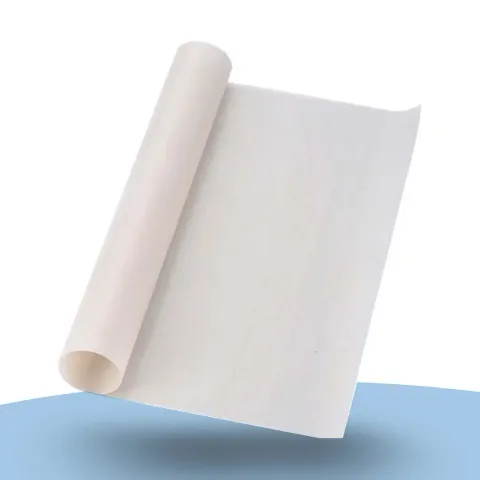 Printed Paraffin PaperFrom £0.25 a sheet200 × 200 mm · 250 × 270 mm · 300 × 300 mmBranded cheese, fudge and sweet wrapsSee this paper
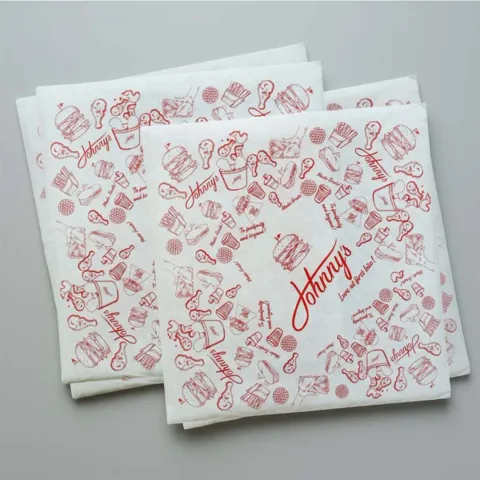 Custom Wax PaperFrom £0.25 a sheet150 × 270 mm · 250 × 270 mm · 300 × 300 mmDeli, sandwich and bakery sheetsSee this paper
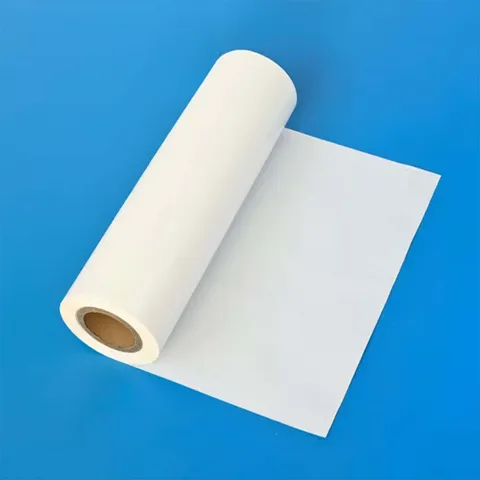 Glassine Paper RollsFrom £0.25 a sheet300 mm × 150 m · 375 mm × 150 m · 450 mm × 300 mInterleaving, coffee and retail linersSee this paper
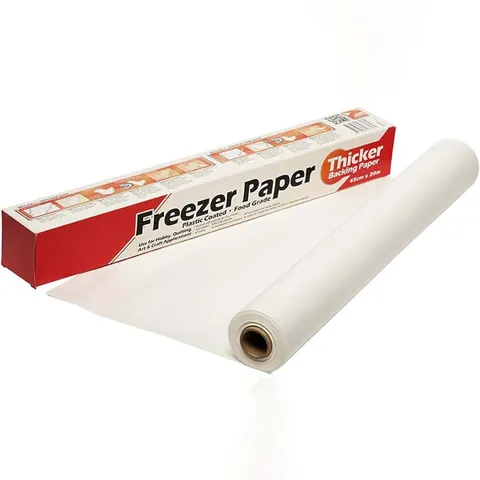 Butcher's Freezer PaperFrom £0.25 a sheet380 mm × 25 m · 450 mm × 50 m · 450 mm × 300 mMeat, fish and game storageSee this paper
Name the paper, a size and a quantity, and attach a logo if you have one. A written price and a free design proof come back within one working day. Rather talk it through? Call +44 7578 382054 or message us on WhatsApp.