Does burger wrap paper stop sauce leaking into the bag?
Yes. The sheet is a high hold-out greaseproof, so burger sauce and melted cheese stay inside the fold rather than soaking into the carrier bag.
Burger wrap paper is a heavier greaseproof sheet, cut square, that folds round a hot burger and holds the sauce in. On the pass it keeps the bun dry under the lamp and carries your logo out of the door.
From £0.25 a sheet. Written quote in one working day and a free design proof; the exact number depends on size, ink count and quantity.
From £0.25 a sheet. Exact price on the written quote.
| Base sheet | Kraft or white greaseproof, high grease hold-out |
|---|---|
| Typical weight | About 40–50 gsm; heavier than a sandwich sheet |
| Heat | Dry heat to about 200°C (typical); a hot pass for 10–15 minutes is fine |
| Moisture | Holds sauce and cheese fat; steam escapes through the fold |
| 1–4 food-safe colours, Pantone matched, single logo or repeat | |
| Packing | Flat, counted stacks of 500, cartons of 1,000 or 2,000 |
Burger wrap paper is a dense greaseproof sheet, kraft or white, cut to a square or near-square size and printed with your branding. It takes dripping sauce, melted cheese and a few minutes under a heat lamp without going soft. It is also the sheet most chip shops line a tray with.
| Format | Typical size | Typical use |
|---|---|---|
| Sheet | 250 × 250 mm | Slider, small burger |
| Sheet | 300 × 300 mm | Standard burger |
| Sheet | 350 × 350 mm | Double or stacked burger |
| Sheet | 300 × 400 mm | Burger with a chip basket |
The four sizes above are the usual picks; any other size is a custom cut, so ask on the quote. Full sheet and roll size chart.
Pick one of this paper's photos, drop your logo on it and send the mock along with your quote request.
Upload a logo and it appears on this sheet
A burger wrap is the square of paper that goes round the bun before the burger hits the tray or the bag. It is heavier than sandwich paper because it has a harder life: hot cheese, burger sauce, a lamp overhead.
Burger bars, burger vans at festivals and the kiosk at the football all use the same sheet. Street food traders use it for loaded fries. Chip shops use the bigger cut as chip shop paper under a fish supper.
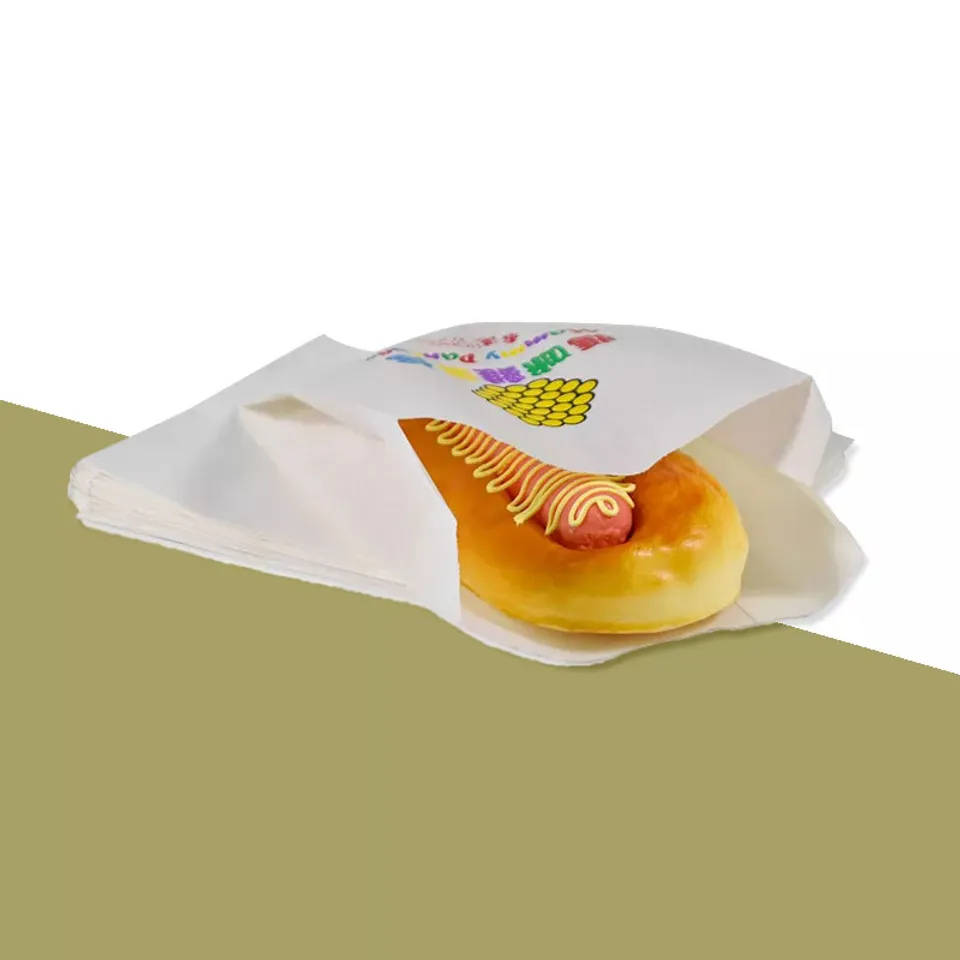
The first photo shows the sheet in white round a hot dog in a roll, mustard and all, with the printed side facing out. The second shows five finished designs: a kraft sheet with small black icons and four white sheets in bright colours.
Not in the time a burger waits on the pass. The grease hold-out stops cheese fat soaking through, and dry heat from a lamp does nothing to greaseproof paper below about 200°C.
Steam is the thing to manage. A burger wrapped tight straight off the grill will sweat, and a soggy bun is the result. Leave the fold loose at the top or fold with the paper half open until it is handed over.
Wax paper behaves worse here. Under a lamp the wax goes tacky and clear, which is why a plain greaseproof sheet is the better pick for a hot counter.
A single quarter-pounder in a standard bun sits happily in a 300 mm square. A double with bacon needs the 350 mm square, or the paper will not meet at the top.
| Typical size | Usual use |
|---|---|
| 250 × 250 mm | Sliders, hot dogs in a roll, a small chicken burger |
| 300 × 300 mm | Standard single burgers, most burger vans |
| 350 × 350 mm | Doubles, stacked burgers, anything with a brioche bun |
| 300 × 400 mm | Chip shop paper for a tray, loaded fries, a wrap and chips together |
Those are the four cuts most burger bars settle on. If you serve a particular bun size, measure it across the widest point and add 200 mm for the fold. The guide to sheet sizes by food has a longer list.
The fold matters as much as the sheet. Done well it keeps the burger together in the bag and shows the logo on top.
For a half-wrap on the pass, stop after step three and leave the top open so steam gets out.
A cold sandwich sheet at 35 gsm would fall apart round a burger. The weight here starts around 40 gsm and goes up to 50 gsm for vans that wrap, bag and hand over in one go.
Heavier paper costs a little more per sheet but folds with a crisper edge and tears less. If you run a delivery menu, go to the heavier end.
Kraft burger wrap with a single black print looks like it belongs on a wooden board. Small repeated icons, as in the second photo, work well because a burger fold hides half the sheet anyway.
White stock is where bright colour lives. A yellow and red design on white reads from across a food hall. Four colours are the most we print, and solids are matched to Pantone solid-coated swatches.
Pick kraft if your branding is simple and dark. Pick white if your logo depends on a bright tint. Both take the same inks and both cope with a hot pass.
A repeat is the safe bet for burger paper. The fold is unpredictable in a busy kitchen, and a repeat means the mark shows whichever way the sheet ends up.
A single large logo works if staff fold the same way every time, with the mark landing on the top face. It looks sharper in photographs, which matters if your customers post their food.
Keep text off the outer 10 mm, convert fonts to outlines and avoid lines thinner than 0.5 mm. The printing on greaseproof paper guide goes through artwork prep step by step.
The 300 × 400 mm cut is what most people mean by chip shop paper. One sheet lines the polystyrene or card tray, the fish goes on top, and the ends fold over to keep the chips warm on the walk home.
Loaded fries sit on the same sheet in a cardboard boat. Street food traders use it under halloumi fries, under a kebab, under anything with a sauce that would otherwise pool in the tray.
If you serve chips in a basket, a printed basket liner cut square is a lighter and cheaper option for that job.
Wrapping hot and tight is the first. Steam softens the bun long before it softens the paper, so give it a minute or leave the top open.
Ordering 250 mm squares for a stacked burger is the second. The corners will not meet. Order a sample size up and test it on your biggest bun.
Printing pale yellow on kraft is the third. It disappears. Use white stock for anything paler than a mid tone.
Last, some bars print the menu on the sheet. Prices change and you end up with 3,000 sheets you cannot use. Keep the print to the logo, a strapline and a social handle at most.
Send the size in mm, kraft or white, the gsm if you know it and the number of colours in your artwork. A written quote comes back inside one working day. From £0.25 a sheet is the usual starting point for a 300 mm square.
Once you say yes to the quote, we lay out a free proof at full size and tweak it until it is right. Print then takes 4–6 working days.
Delivery is free and tracked to UK mainland addresses, usually 2–3 working days after dispatch. The minimum run is 1,000 sheets. Ask for a burger wrap paper quote and we go from there.
The questions UK buyers ask before a first order. Type a word to filter the cards, or open one for the full answer.
Yes. The sheet is a high hold-out greaseproof, so burger sauce and melted cheese stay inside the fold rather than soaking into the carrier bag.
300 × 300 mm. It takes a standard single burger with room for the diamond fold, and the stack fits most van shelves without trimming.
It can. The 300 × 400 mm cut is the one chip shops use to line a tray, and it holds vinegar and fat the same way it holds burger sauce.
No. The ink dries into the fibre before the sheets are packed, so a warm glazed bun pressed against the print picks up nothing.
Start with the minimum of 1,000 sheets in one size. That tells you how fast you get through them before you commit to a larger run with a lower unit cost.
Kraft for a dark one-colour logo, white for anything bright or with more than two colours.
Kraft for a dark one-colour logo, white for anything bright or with more than two colours. Both take the same heat and grease.
Not as a photograph. We print up to four solid colours, which suits logos, icons and patterns.
Not as a photograph. We print up to four solid colours, which suits logos, icons and patterns. A photo with gradients will not reproduce on uncoated greaseproof.
A folded wrap holds useful heat for about ten minutes in a bag.
A folded wrap holds useful heat for about ten minutes in a bag. Beyond that, a box lined with the same sheet does a better job than paper alone.
Not a different paper, just a heavier one. A 50 gsm sheet copes better with a long queue, outdoor damp and customers walking across a field.
Yes, and it should. Wrap the burger, leave the top open a touch for steam, then box it.
Yes, and it should. Wrap the burger, leave the top open a touch for steam, then box it. The paper stops the box lid going greasy.
About two weeks door to door: one working day for the quote, proofing, then 4–6 working days to print and 2–3 for tracked delivery.
About two weeks door to door: one working day for the quote, proofing, then 4–6 working days to print and 2–3 for tracked delivery. Our delivery page for UK orders sets it out.
Yes, as long as each design meets the 1,000 sheet minimum. Two designs on the same size and stock share setup, which keeps the quote tidy.
No match. Ask us on WhatsApp or call +44 7578 382054.
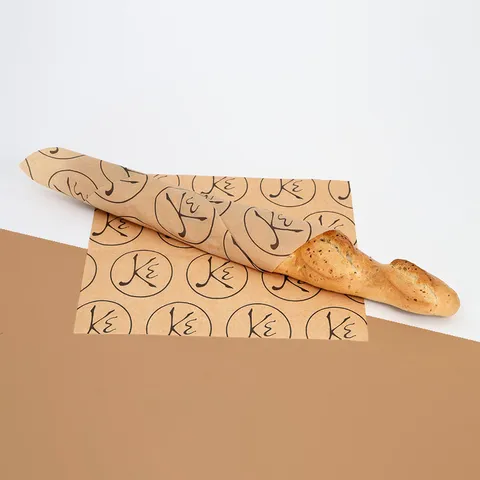 Custom Printed Greaseproof SheetsFrom £0.25 a sheet250 × 375 mm · 300 × 300 mm · 350 × 450 mmLogo wraps for hot foodSee this paper
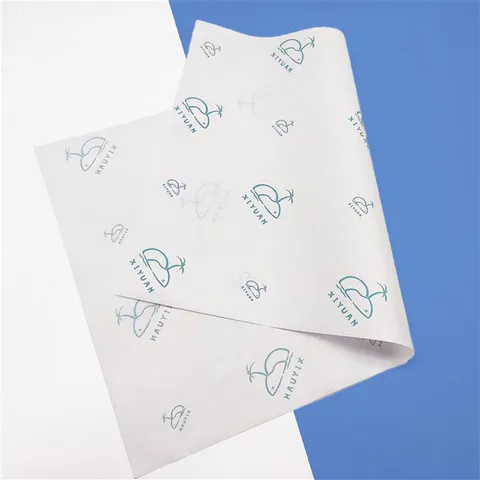 Greaseproof Basket LinersFrom £0.25 a sheet250 × 250 mm · 300 × 300 mm · 300 × 400 mmChip baskets, trays and platesSee this paper
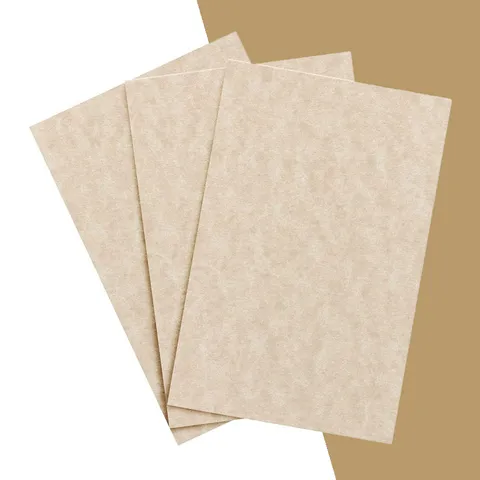 Textured Greaseproof PaperFrom £0.25 a sheet200 × 200 mm · 300 × 300 mm · 300 × 400 mmNatural-look wraps and linersSee this paper
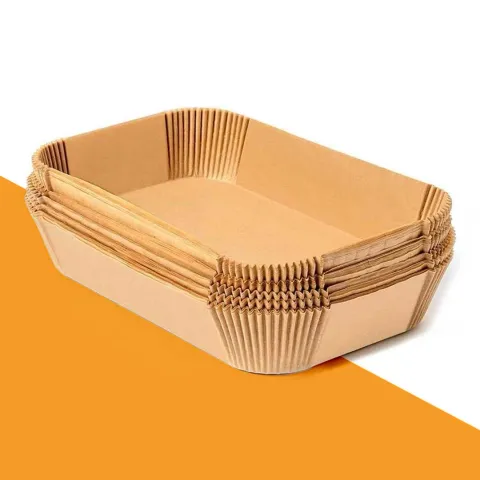 Tray and Air Fryer LinersFrom £0.25 a liner160 × 160 mm · 200 × 200 mm · 265 × 325 mmBaking trays, gastronorm pans and air fryersSee this paper
Name the paper, a size and a quantity, and attach a logo if you have one. A written price and a free design proof come back within one working day. Rather talk it through? Call +44 7578 382054 or message us on WhatsApp.