Do greaseproof basket liners stop oil reaching a wire basket?
Yes. The liner catches chip fat and salt so the basket itself stays clean through a sitting, and only the paper goes in the bin.
Greaseproof basket liners are light, square-cut greaseproof sheets that drop into a wire or plastic serving basket before the chips go in. They stop fat reaching the basket and put your logo under every portion.
From £0.25 a sheet. Written quote in one working day and a free design proof; the exact number depends on size, ink count and quantity.
From £0.25 a sheet. Exact price on the written quote.
| Base sheet | Light kraft or white greaseproof |
|---|---|
| Typical weight | About 30–38 gsm; lighter than a burger wrap |
| Heat | Dry heat to about 200°C (typical); fine under a heat lamp |
| Grease hold | Standard; holds chip fat and salt through a sitting |
| 1–2 colours usual, up to 4 on white; repeat patterns common | |
| Packing | Flat, stacks of 500, cartons of 1,000 |
A greaseproof basket liner is a thin greaseproof sheet, usually 300 mm square, that lines a chip basket, a burger basket or a serving tray. It catches oil and salt so the basket stays clean between covers. The sheet is printed with your branding and the corners fold up the sides of the basket on their own.
| Format | Typical size | Typical use |
|---|---|---|
| Sheet | 250 × 250 mm | Small chip basket |
| Sheet | 300 × 300 mm | Standard basket |
| Sheet | 300 × 400 mm | Large basket, half tray |
| Sheet | 400 × 600 mm | Full tray |
The four sizes above are the usual picks; any other size is a custom cut, so ask on the quote. Full sheet and roll size chart.
Pick one of this paper's photos, drop your logo on it and send the mock along with your quote request.
Upload a logo and it appears on this sheet
A basket liner is the sheet between the chips and the basket. Without it the basket goes greasy, the salt falls through the mesh and the washing-up pile doubles.
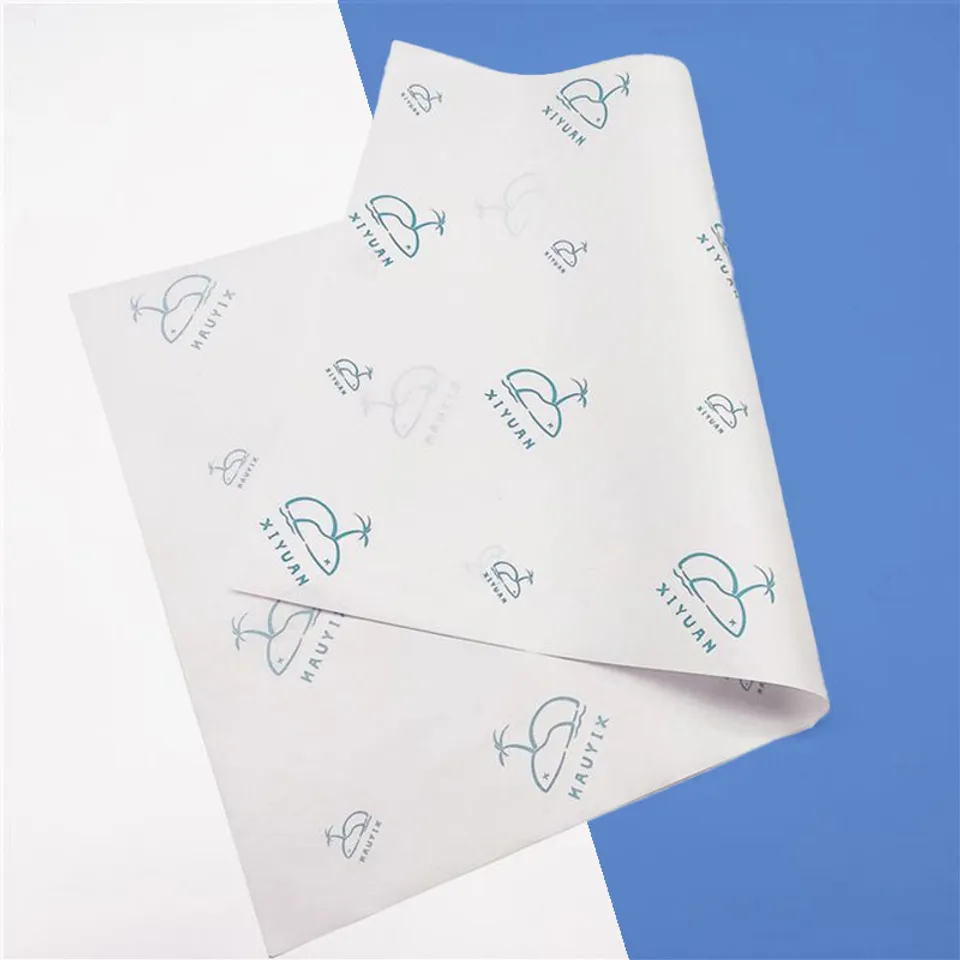
The first photo shows a white liner with a teal one-colour logo repeated across it, folded once. The second shows a plain cream square with one corner turned up, which is how a liner sits once it is pushed into a basket.
Chip shops with seating use them in wire baskets. Burger bars use them in red plastic baskets for a burger and chips. Cafés lay one in a wooden board with a lip. Street food traders use them in cardboard trays when the paper is cheaper than a lined tray.
Hot chips give off steam, and a bare basket lets the steam fall straight through onto the table. The bottom layer of chips then sits in its own moisture and goes limp within minutes.
A greaseproof liner changes the airflow. It catches the drips, holds a little warmth under the chips and still lets steam rise off the top. The result is a basket that stays crisper for longer.
The liner also protects the customer from the basket. Nobody wants to pick a chip off bare mesh that has been through a dishwasher fifty times.
A liner also makes clearing tables quicker. Lift the corners, the whole lot comes out in one, and the basket goes back on the pass dry.
Most wire chip baskets are around 200 to 230 mm across and 60 mm deep. A 300 mm square liner covers the base and climbs the sides with a few centimetres to spare.
| Typical size | Basket or tray it lines |
|---|---|
| 250 × 250 mm | Small chip cones and mini baskets for sides |
| 300 × 300 mm, about a foot square | Standard wire chip baskets and plastic burger baskets |
| 300 × 400 mm | Oval baskets, boards with a lip, fish and chip trays |
| 400 × 600 mm | Sharing baskets, wooden crates, platters for a table |
If your baskets are an unusual shape, push a plain sheet in, mark where it meets the rim and measure that. Odd sizes are a custom cut and the size chart for sheets and rolls shows how to note it on the quote.
There is no folding to learn. The sheet is pushed in and the corners do the rest.
That last step is why a square liner beats a round one. The corners become handles.
Liners run lighter than wraps because they do not get folded hard or carried far. The risk is going too light, when the sheet tears as a wet chip is dragged across it.
White liners show the logo more clearly and show a grease mark more clearly too. Kraft hides the mark and gives the chips a warmer look under the lights.
Most of a liner is hidden under food. The part that shows is the corners climbing the sides of the basket, so a repeat pattern is the sensible layout. Whichever corner rises, some of the mark rises with it.
A single logo in the centre disappears under the first scoop of chips. If you want a single mark, put one in each corner, about 30 mm in from the edge.
One colour on white is the cheapest print and looks clean under a heat lamp. The teal repeat in the first photo is a good example: a mid-tone ink on white reads well without looking heavy. We match solids to Pantone solid-coated swatches.
Keep the artwork simple. A liner lives for twenty minutes under a pile of chips, so a clean mark at a readable size beats a detailed crest every time.
They can for a short sitting. A 300 mm liner lines a cardboard chip tray as well as it lines a basket, and the 300 × 400 mm cut lines a fish and chip box.
As a wrap, a liner is on the thin side. It will carry a bag of chips home but it will not hold a dripping burger the way a heavier sheet does. For that job, pick a heavier printed burger wrap sheet and keep the liner for the basket.
If you serve in an oven-to-table dish rather than a basket, the liner is not the right paper. It is for serving, not baking.
Ordering the liner too small is the common one. A 250 mm square in a 230 mm basket barely covers the base, so the corners never rise and the logo stays hidden.
Printing the full menu on the liner is the second. It goes under the food and nobody reads it. Keep to the logo and a handle.
The third is dark ink across the whole sheet. Solid-flood prints cost more, show every scratch from the basket mesh and can look dirty under vinegar. Keep plenty of bare paper in the design.
Last, do not store the cartons next to the fryer. Greaseproof that lives in a warm, steamy spot goes soft before it reaches the basket.
Give us the basket size or the liner size in mm, kraft or white, and the number of colours in your artwork. If you only have the basket, say so and we work out the cut from it.
A written quote comes back within one working day. The free proof follows once you accept it, and you can change it as many times as you like before print.
Production is 4–6 working days from proof approval. Tracked delivery to a UK mainland address is free and takes 2–3 working days. The minimum is 1,000 liners, and you can start on the basket liner quote form any time.
The questions UK buyers ask before a first order. Type a word to filter the cards, or open one for the full answer.
Yes. The liner catches chip fat and salt so the basket itself stays clean through a sitting, and only the paper goes in the bin.
300 × 300 mm. It covers the base and rises up the four sides of the usual 230 mm basket with a corner left to grip.
It softens a little where vinegar pools but holds together for a sitting.
It softens a little where vinegar pools but holds together for a sitting. Choose the 38–40 gsm grade if you serve curry sauce or gravy on the chips.
Square. The corners rise up the basket sides and act as handles for a takeaway, which a round liner cannot do.
Yes, as long as the board has a lip to hold the corners. On a flat board a 300 × 400 mm sheet lies flat and does the same job without rising.
One colour is enough. Most of the liner is under the chips, so a single mid-tone repeat on white gives the clearest result for the least cost.
Yes. Kraft hides grease marks better and gives chips a warmer look, though a pale logo will not show on it.
Yes. Kraft hides grease marks better and gives chips a warmer look, though a pale logo will not show on it. White is better for bright colours.
Roughly one per cover, so a shop doing 150 sit-in covers a day gets through about 1,000 liners a week.
Roughly one per cover, so a shop doing 150 sit-in covers a day gets through about 1,000 liners a week. Order accordingly.
Yes. The 400 × 600 mm cut is the typical size for sharing baskets and crates, and larger sheets are a custom cut on the quote.
Same family, lighter grade. A liner runs about 30–38 gsm and lies flat; a burger wrap runs heavier so it can fold and hold sauce.
A little. The liner holds warmth under the chips and lets steam rise off the top, so the bottom layer does not sit in its own moisture.
Send photos within 10 days and we reprint or refund the damaged part.
Send photos within 10 days and we reprint or refund the damaged part. The returns and reprints page lists what to include.
No match. Ask us on WhatsApp or call +44 7578 382054.
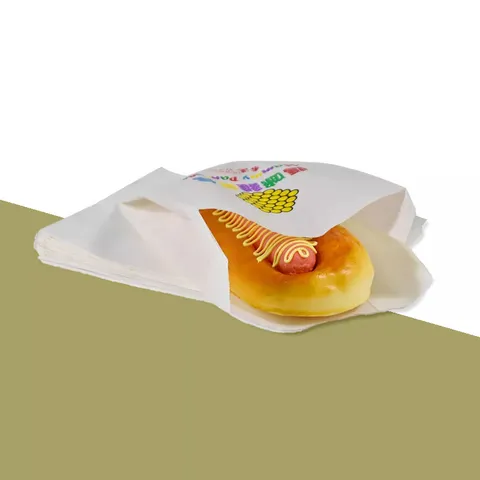 Burger Wrap PaperFrom £0.25 a sheet250 × 250 mm · 300 × 300 mm · 350 × 350 mmBurgers, chicken burgers and wrapsSee this paper
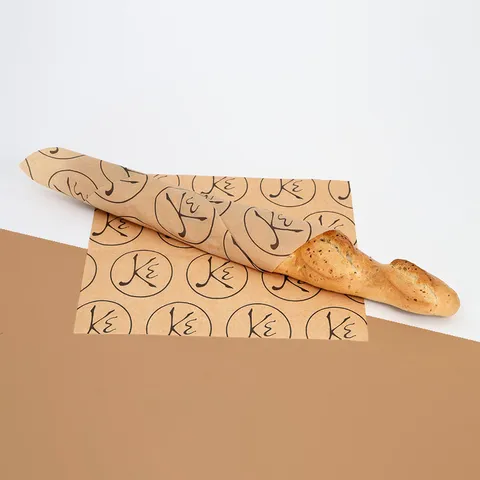 Custom Printed Greaseproof SheetsFrom £0.25 a sheet250 × 375 mm · 300 × 300 mm · 350 × 450 mmLogo wraps for hot foodSee this paper
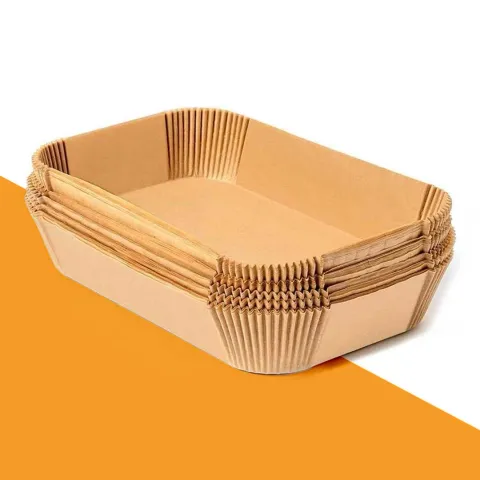 Tray and Air Fryer LinersFrom £0.25 a liner160 × 160 mm · 200 × 200 mm · 265 × 325 mmBaking trays, gastronorm pans and air fryersSee this paper
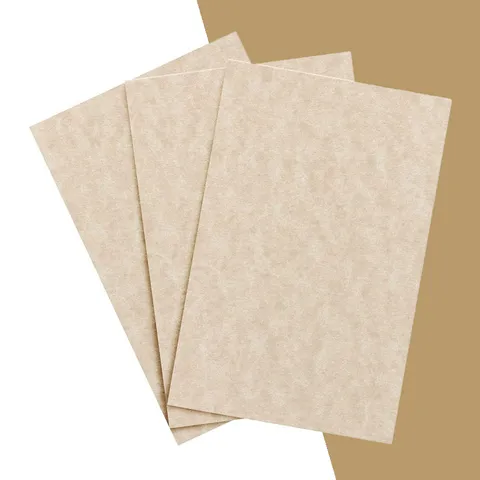 Textured Greaseproof PaperFrom £0.25 a sheet200 × 200 mm · 300 × 300 mm · 300 × 400 mmNatural-look wraps and linersSee this paper
Name the paper, a size and a quantity, and attach a logo if you have one. A written price and a free design proof come back within one working day. Rather talk it through? Call +44 7578 382054 or message us on WhatsApp.