Which loaf tin liner fits a 2 lb tin?
The 2 lb liner, with a base of about 230 × 130 mm. It drops into a standard 2 lb tin and the pleats take up any small difference.
Loaf tin liners are pre-formed greaseproof cups with a flat base and pleated walls that drop straight into a loaf tin. No greasing, no cutting parchment to shape, and the loaf lifts out in the paper and goes on the shelf in it.
From £0.25 a liner. Written quote in one working day and a free design proof; the exact number depends on size, ink count and quantity.
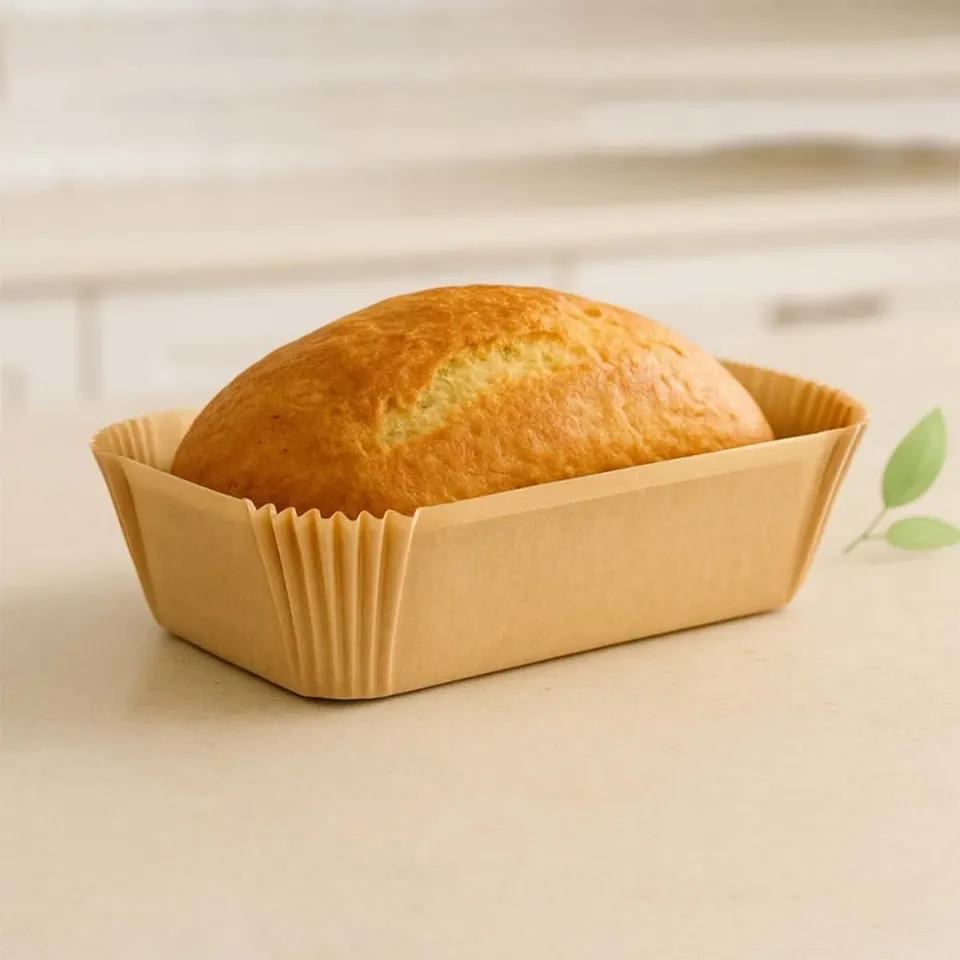
From £0.25 a liner. Exact price on the written quote.
| Form | Pre-formed cup with a flat base and pleated walls |
|---|---|
| Base sheet | Greaseproof kraft (natural brown) or bleached white |
| Typical weight | About 40–50 gsm |
| Heat | Oven-safe grades to about 200°C (typical); freezer use to −18°C |
| Typical sizes (base) | Mini 145 × 75 mm, 1 lb 170 × 95 mm, 2 lb 230 × 130 mm, Large 250 × 140 mm |
| Packing | Nested stacks in cartons, plain stock |
A loaf tin liner is a greaseproof paper cup pressed into the shape of a loaf tin. It lines the tin in one movement and comes out with the bake. Kraft and white stock, plain and unprinted, in four sizes.
| Format | Typical size | Typical use |
|---|---|---|
| Liner | Mini (145 × 75 mm) | Mini loaf, gift size |
| Liner | 1 lb (170 × 95 mm) | 1 lb loaf tin |
| Liner | 2 lb (230 × 130 mm) | 2 lb loaf tin |
| Liner | Large (250 × 140 mm) | Large and farmhouse tins |
The four sizes above are the usual picks; any other size is a custom cut, so ask on the quote. Full sheet and roll size chart.
Pick one of this paper's photos, drop your logo on it and send the mock along with your quote request.
Upload a logo and it appears on this sheet
The first photo shows a kraft liner on a worktop with a golden loaf still sitting in it, pleats fanned out along the short ends. The second shows a white liner inside a black non-stick tin, the fluted edge standing a little proud of the rim.
That is the whole idea. The paper is pressed into a cup with a flat base and pleated walls, so it holds its shape in the tin without being cut, folded or taped.
Bakeries, cafés with a counter of banana bread and lemon drizzle, farm shops, school kitchens and anyone selling at a market uses them. One liner per bake, no washing up, and the loaf sells in the paper.
Liner sizes are named after the tin, not the paper. Measure the inside of your tin across the base and match it to the table. The pleats give a few millimetres of play either way.
| Typical liner (base) | Tin it usually fits | Common bake |
|---|---|---|
| Mini, 145 × 75 mm | Mini or individual loaf tin | Single-portion tea loaves, gift cakes |
| 1 lb, 170 × 95 mm | Standard 1 lb loaf tin | Lemon drizzle, banana bread, malt loaf |
| 2 lb, 230 × 130 mm | Standard 2 lb loaf tin | Fruit loaf, carrot cake, meatloaf |
| Large, 250 × 140 mm | Deep catering loaf tin | Bara brith, big bakery loaves, terrines |
A tin that sits between two sizes takes the smaller liner; the pleats open to fill the gap. For tins that match none of these, send the base measurements and the depth, and we quote a custom form. The liner measuring notes show where to put the ruler.
Greaseproof oven grades hold to about 200°C, which covers every loaf cake and most breads. The walls stay upright because the tin supports them, so a heavy wet batter does not push them over.
Butter and oil do not pass through. A sticky toffee loaf or an olive oil cake comes out with a dry tin underneath and no greasy ring on the shelf.
The paper browns a shade in a hot oven, more on white than on kraft, where the colour hides it. That is normal and does not reach the crumb.
Kraft is the natural brown and reads as home-baked and unfussy. It suits farm shops and market stalls and hides the small marks a loaf leaves on the inside of the wall.
White is cleaner for a patisserie counter and shows a fruit loaf or a glossy glaze better. It also shows any oil mark on the outside, so the heavier weight is the safer choice for very rich cakes.
Weight runs from about 40 to 50 gsm. The lighter end is fine for a single bake and a quick sale. The heavier end is the one for loaves that get carried, boxed, or sit in the liner for days.
No. The greaseproof surface releases the loaf on its own, and brushing the liner with butter only makes the paper translucent and spotty.
The one exception is sugar. A crust of caramelised sugar from a sticky glaze can grip the paper, so for a glazed loaf let it cool fully in the liner before you peel it.
Nor does the tin need greasing. The liner stays dry on the outside, and the tin comes out of service with nothing on it but a wipe.
The liners nest, so a stack of a hundred sits in a tray beside the mixer and the whole rack gets lined in a minute.
Most problems come from the tin or the recipe, not the liner. These are the ones that come up again and again.
Fill to two-thirds, cool in the paper, and keep the stock dry. That fixes nearly all of them.
Yes. A pub kitchen or a deli can run a meatloaf, a pork and apple terrine or a nut roast in a 2 lb liner and turn it out clean. The fat stays inside the paper and the tin stays clean.
For a terrine that gets pressed and chilled through the night, leave it in the liner. The paper peels off cold without pulling the surface.
Savoury bakes often carry more fat than a cake, so go for the heavier weight and the kraft colour, which hides any marks on the outside.
It will. Bake, cool, and freeze the loaf in its liner at −18°C, then thaw it on the counter still wrapped. The paper does not go soggy and the loaf does not pick up the taste of the freezer.
On the shelf the liner acts as the base of the packaging. Slide the loaf into a clear bag or a kraft box and the liner keeps the base clean and the sides presentable.
A liner that has been through the freezer looks the same as one that has not, so frozen stock and fresh stock can sit side by side on a stall.
Liners arrive nested in stacks inside cartons, so a 1,000-piece order is a few boxes that go on a shelf in the dry store. The minimum is 1,000 pieces per size.
Tell us the size, the colour, the weight and the quantity on the loaf tin liner quote form, and the quote lands within one working day. Plain liners need no proof, so once you accept the quote, dispatch follows and delivery is free and tracked to any UK mainland address.
If you want the bakery name on the outside wall, ask for the printed version in the same sizes. The form, the paper and the lead time are the same; only the ink is added.
The questions UK buyers ask before a first order. Type a word to filter the cards, or open one for the full answer.
The 2 lb liner, with a base of about 230 × 130 mm. It drops into a standard 2 lb tin and the pleats take up any small difference.
No. The greaseproof surface releases the loaf on its own. Grease only makes the paper translucent and marks the outside.
Yes, as a tin loaf. Greaseproof oven grades hold to about 200°C, so a sandwich loaf or a tin sourdough bakes fine.
Yes, as a tin loaf. Greaseproof oven grades hold to about 200°C, so a sandwich loaf or a tin sourdough bakes fine. The crust will be softer where the paper touches it.
Only when empty. Filled with batter the pleated walls bow outward, so bake in a tin or a close-fitting mould every time.
No. The loaf peels away cleanly once it has cooled. Only a hard sugar glaze can grip the paper, and cooling fully solves that.
Yes. Freeze the baked loaf in its liner at −18°C and thaw it still in the paper.
Yes. Freeze the baked loaf in its liner at −18°C and thaw it still in the paper. The liner comes out looking as it went in.
Both. Kraft is the natural brown that hides marks; white shows a glaze better and suits a patisserie counter.
Nested in stacks inside cartons. A thousand liners is a few boxes that sit on a dry-store shelf beside the mixer.
Yes. A 2 lb or large liner takes a meatloaf, a terrine or a nut roast and turns it out clean.
Yes. A 2 lb or large liner takes a meatloaf, a terrine or a nut roast and turns it out clean. Choose the heavier weight for fatty bakes.
About 40–50 gsm greaseproof. The lighter end suits a quick sale; the heavier end suits loaves that are boxed, carried or stored.
Yes. Send the inside base measurements and the depth and we quote a custom form.
Yes. Send the inside base measurements and the depth and we quote a custom form. Sizes between two standards usually take the smaller liner.
One thousand pieces per size. Plain liners need no proof, so the order goes to dispatch once the quote is accepted.
No match. Ask us on WhatsApp or call +44 7578 382054.
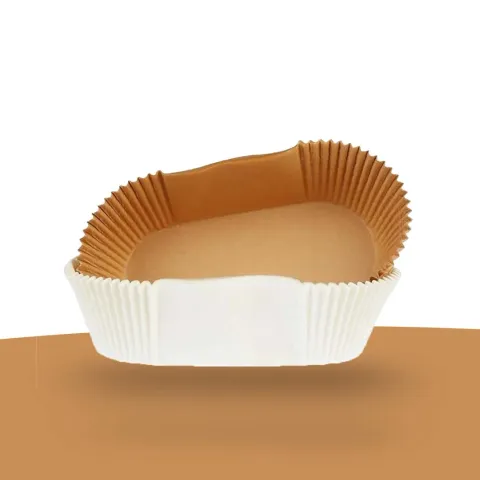 Printed Loaf Tin LinersFrom £0.25 a linerMini (145 × 75 mm) · 1 lb (170 × 95 mm) · 2 lb (230 × 130 mm)Bakery loaves sold in the linerSee this paper
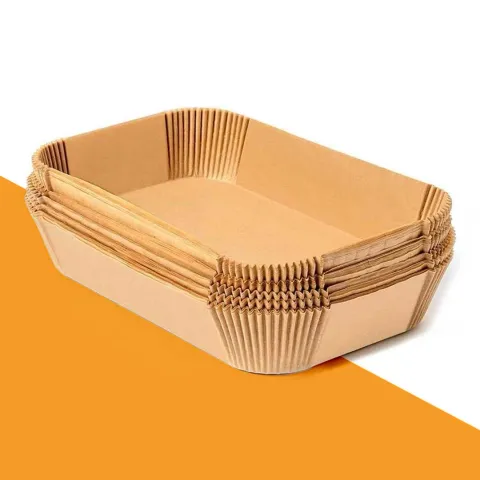 Tray and Air Fryer LinersFrom £0.25 a liner160 × 160 mm · 200 × 200 mm · 265 × 325 mmBaking trays, gastronorm pans and air fryersSee this paper
 Greaseproof Basket LinersFrom £0.25 a sheet250 × 250 mm · 300 × 300 mm · 300 × 400 mmChip baskets, trays and platesSee this paper
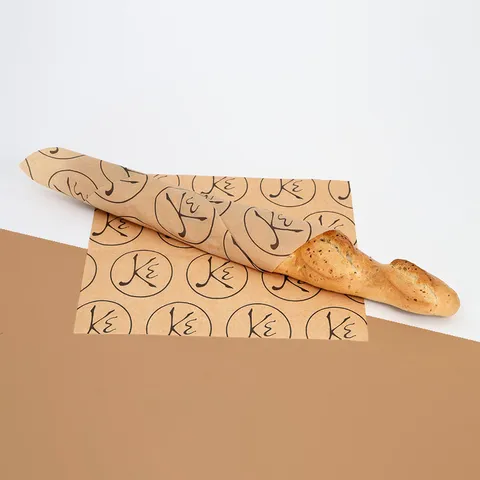 Custom Printed Greaseproof SheetsFrom £0.25 a sheet250 × 375 mm · 300 × 300 mm · 350 × 450 mmLogo wraps for hot foodSee this paper
Name the paper, a size and a quantity, and attach a logo if you have one. A written price and a free design proof come back within one working day. Rather talk it through? Call +44 7578 382054 or message us on WhatsApp.