Is textured greaseproof paper the same as parchment paper?
No. It looks like parchment but has no silicone coating, so it is for wrapping and presenting food rather than lining an oven tray.
Textured greaseproof paper is a mottled, cloud-marked sheet that looks like old parchment but holds grease like any other greaseproof. It goes under cheese, bread and cake where the paper itself is on show.
From £0.25 a sheet. Written quote in one working day and a free design proof; the exact number depends on size, ink count and quantity.
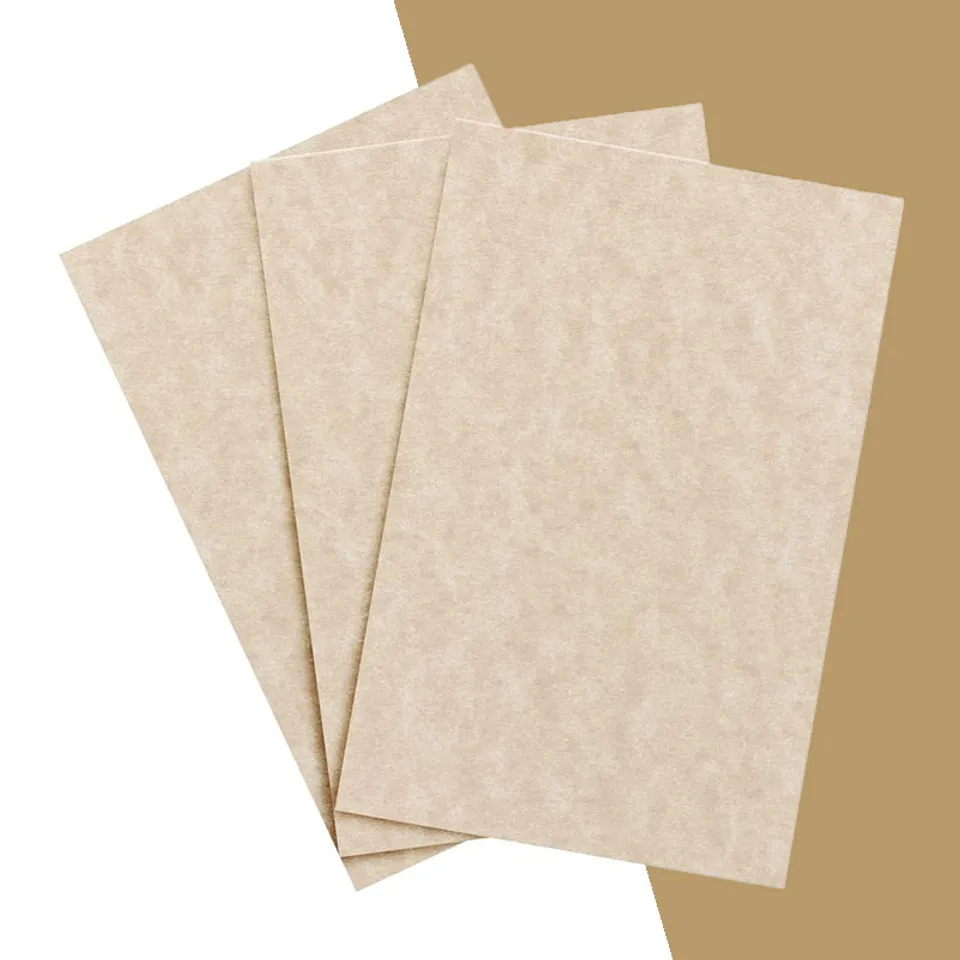
From £0.25 a sheet. Exact price on the written quote.
| Base sheet | Greaseproof with a mottled, marbled fibre pattern |
|---|---|
| Shades | Natural beige, warm gold, soft white |
| Typical weight | About 40–45 gsm; a 50 gsm grade for boards |
| Heat | Dry heat to about 200°C (typical); not for lining tins |
| 1–2 colours usual, up to 4 on the white shade | |
| Finish | Matt, slightly toothy to the touch |
Textured greaseproof paper is a greaseproof sheet made with a visible fibre pattern, so the surface looks marbled rather than flat. It comes in a natural beige, a warm gold and a soft white. It holds butter and cheese fat, folds cleanly and takes a one or two colour print.
| Format | Typical size | Typical use |
|---|---|---|
| Sheet | 200 × 200 mm | Pastry and biscuit wrap |
| Sheet | 300 × 300 mm | Bread and sandwich wrap |
| Sheet | 300 × 400 mm | Tray liner |
| Sheet | 450 × 600 mm | Full baking tray liner |
The four sizes above are the usual picks; any other size is a custom cut, so ask on the quote. Full sheet and roll size chart.
Pick one of this paper's photos, drop your logo on it and send the mock along with your quote request.
Upload a logo and it appears on this sheet
Look at the first photo and you see three sheets in a beige that shifts from light to dark in soft patches. That mottling is in the fibre, not printed on. Every sheet is slightly different.
The second photo shows the gold shade. It is warmer and brighter, closer to a parchment scroll, and it sets off a dark rye or a wedge of hard cheese.
The surface has a slight tooth. It is not rough, but it is not the slippery smooth of a white sandwich sheet either. That tooth is what gives the sheet its look on a board.
Cheese shops are the obvious home. A piece of cheddar wrapped in a mottled sheet looks right in a way that bright white never does. The paper hides the small damp patch a cheese leaves after a day in the fridge.
Bakeries lay it under a loaf on the counter and in the basket. Farm shops line a wooden box with it before the scones go in. Cafés slide a slice of tart onto a square of it so the plate looks dressed.
Fudge and tablet makers use the small squares between layers in a gift box. Delis wrap a slab of pork pie in it and tie string round the outside.
Street food traders who sell on a wooden board rather than in a tray pick it for the same reason. The paper is part of the plate.
Yes, within the normal limits of greaseproof. The mottled sheet is beaten and sized the same way as a smooth one. The pattern is a difference in how the fibre settles, not a thinner spot.
Butter, cheese fat and the oil from a focaccia stay on the inside face. A very wet item, a brie at room temperature for a whole afternoon, will eventually show a mark on any uncoated paper.
For cheese that sweats, the sheet still beats wax paper on a counter. Wax traps moisture against the rind; greaseproof lets a little breathe out. If you need a sealed wrap, look at custom wax paper for cheese instead.
Textured sheets are usually bought for presentation, so the size is set by the board or basket rather than by a fold.
| Typical size | Where it goes |
|---|---|
| 200 × 200 mm | Cheese portions, fudge squares, under a scone or slice |
| 300 × 300 mm | Small boards, cake stands, wrapping a wedge of hard cheese |
| 300 × 400 mm | Bread baskets, deli slabs, lining a gift box |
| 450 × 600 mm | Large boards, grazing platters, wrapping a whole loaf |
Boards and baskets vary a lot, so measure yours. A sheet that overhangs a board by 20 mm looks deliberate; one that overhangs by 80 mm looks like a mistake.
The three shades do different jobs. Natural beige is the quiet one and suits almost any cheese or bread. Gold is bolder and works for a bakery that wants warmth. White is the pick if your logo needs a clean background.
The heavier grade lies flatter on a wooden board and that matters when the paper is part of the display. There is more on grades in our guide to picking the right greaseproof weight.
Print one colour, and make it dark. A deep brown or a near-black on the natural shade looks like it was stamped by hand, which is exactly the effect most cheese shops want.
The mottling shows through pale inks and makes them look patchy. If your mark is a soft colour, use the white shade, or accept that the texture will show in the print.
Fine detail suffers a little on a toothy surface. Keep line weights above 0.6 mm and avoid small reversed-out text. A single stamp-style logo in one corner suits this paper better than a dense repeat.
Smooth kraft is cheaper and prints sharper. Choose it for sheets that get folded round food and thrown away in a minute.
Textured paper is for the moment the customer sees the paper: on a board, in a box, in the window. Pay the small extra for the sheets that are on show, and use plain kraft behind the scenes.
Some bakeries do both. They wrap with a smooth printed kraft greaseproof sheet and line the display baskets with the mottled one.
A box of fudge or a hamper is where this paper does its best work. Here is the layout that keeps the contents tidy and the paper looking crisp.
Cheese shops use the same trick in a wooden box, with the sheet left loose on top so the lid presses it down. The texture carries the gift as much as the ribbon does.
Using it to line a baking tray is the first. It is greaseproof, not baking parchment, and a biscuit will stick to it. Keep it for after the oven.
Printing a four-colour design on the gold shade is the second. The yellow base shifts every ink, so blue goes green and red goes orange. One or two dark inks look far better.
Buying the light grade for a big board is the third. A 40 gsm sheet curls at the edges under a warm room light. Go heavier for anything over 300 mm.
Tell us the shade, the size in mm and whether you want it plain or printed. A plain run is quick to quote; a printed one needs your logo as a vector file.
The written quote arrives within one working day and the free proof follows once you accept it. Printing takes 4–6 working days and tracked UK mainland delivery adds 2–3.
The minimum is 1,000 sheets in one size and shade. Samples of the three shades can be added to the quote; ask on the textured greaseproof paper quote form and we will include them.
The questions UK buyers ask before a first order. Type a word to filter the cards, or open one for the full answer.
No. It looks like parchment but has no silicone coating, so it is for wrapping and presenting food rather than lining an oven tray.
Yes. There is a soft white shade with the same mottled fibre pattern, and it is the one to pick if your logo is a pale colour.
It can, and it is the paper most cheese counters choose. The mottled surface hides any small damp patch and the sheet lets the cheese breathe.
Two dark colours print well on the natural shade. Two pale colours or a dark and a pale together look patchy because the texture shows through the lighter ink.
300 × 400 mm suits most wicker and wire baskets. Measure the inside base and add about 60 mm on each side for the walls.
Yes, slightly. The pattern is in the fibre, so no two sheets are identical.
Yes, slightly. The pattern is in the fibre, so no two sheets are identical. The overall shade and density stay consistent across a run.
Yes. Dry heat from a warm cabinet does not affect it, and the paper hides the small grease mark a pasty leaves while it sits.
A little, because the base paper costs more to make. The quote shows both side by side if you ask, so you can split the order between the two.
About 45–50 gsm is the right grade. It lies flat on a board and does not curl at the corners under a warm light.
Yes. The 200 × 200 mm cut is a typical size for layering fudge or tablet, and smaller squares are a custom cut on the quote.
A single stamp-style mark in one corner suits this paper. A dense repeat fights the mottled background and loses detail.
Yes. Plain sheets are quoted on their own and skip the proofing stage, so they arrive a few days sooner than a printed run.
No match. Ask us on WhatsApp or call +44 7578 382054.
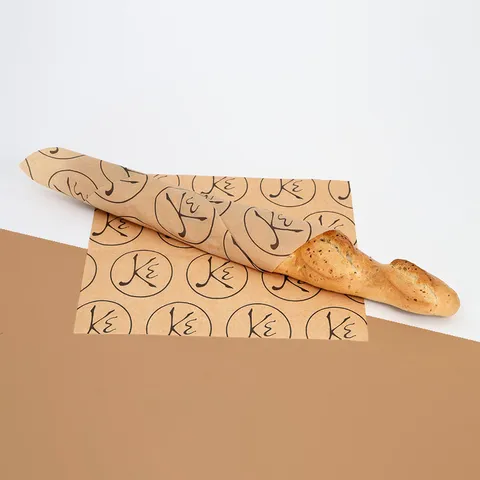 Custom Printed Greaseproof SheetsFrom £0.25 a sheet250 × 375 mm · 300 × 300 mm · 350 × 450 mmLogo wraps for hot foodSee this paper
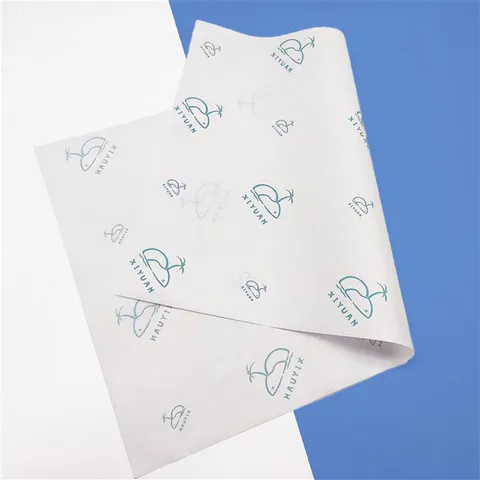 Greaseproof Basket LinersFrom £0.25 a sheet250 × 250 mm · 300 × 300 mm · 300 × 400 mmChip baskets, trays and platesSee this paper
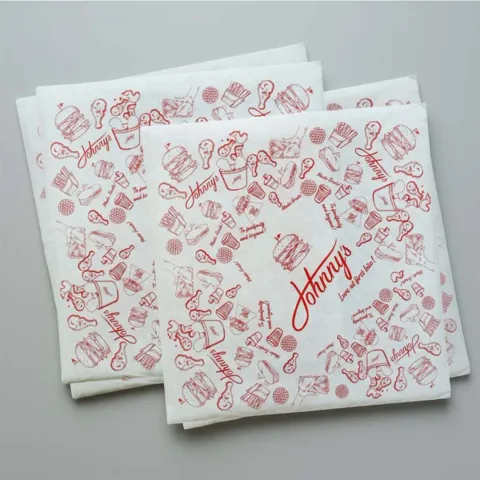 Custom Wax PaperFrom £0.25 a sheet150 × 270 mm · 250 × 270 mm · 300 × 300 mmDeli, sandwich and bakery sheetsSee this paper
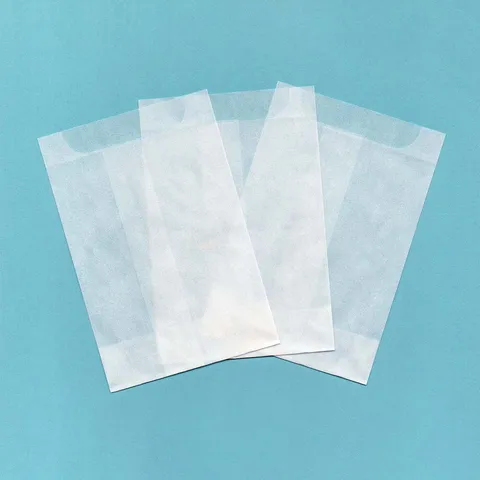 Glassine Paper BagsFrom £0.25 a bag90 × 140 mm · 120 × 170 mm · 140 × 190 mmBiscuits, pastries and sweetsSee this paper
Name the paper, a size and a quantity, and attach a logo if you have one. A written price and a free design proof come back within one working day. Rather talk it through? Call +44 7578 382054 or message us on WhatsApp.