What makes glassine different from other greaseproof paper?
Most greaseproof paper gets its grease hold from a long beating of the pulp. Glassine goes one step further and is pressed between hot, polished rollers until the surface is smooth enough to shine. That pressing closes the sheet so tightly that light passes through it and oil does not.
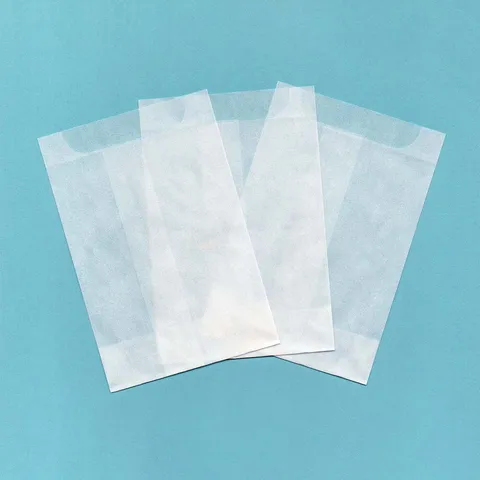
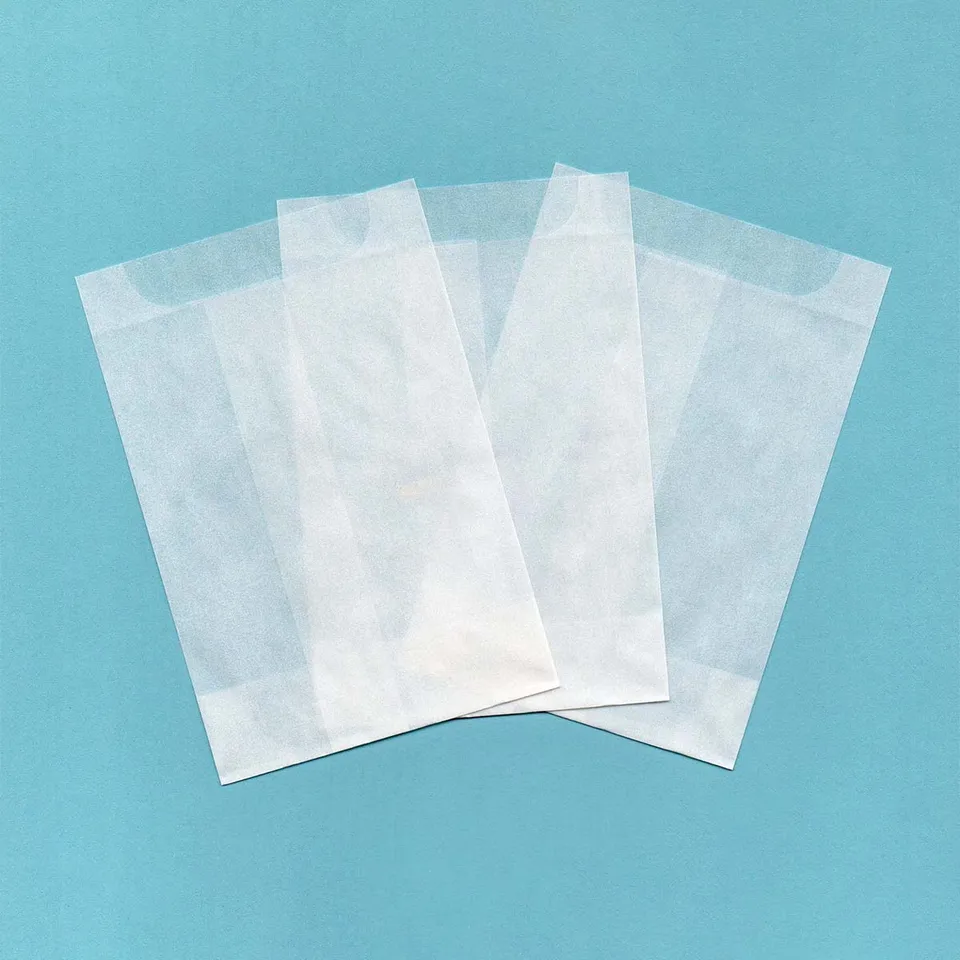
Held in the hand it looks milky. Laid over a slab of tablet or a dark chocolate it turns nearly clear. It is light, about 30 to 40 gsm, and it rustles, which is part of why it reads as a gift rather than a takeaway.
There is no wax, no film and no coating, so there is nothing to taste and nothing to flake into the food.
Bags or rolls: which glassine format does your counter need?
The two products in this range are the same sheet in two shapes. Each is made for a different bench.
| Format | Made for | Print | Usual pick | Worth knowing |
|---|
| Glassine paper bags | Macarons, brownies, flapjacks, fudge, single soap bars, seed packets | One or two colours on the front panel | 120 × 170 mm | Flat with a back seam; closed with a fold and a sticker or a fold-over flap |
|---|
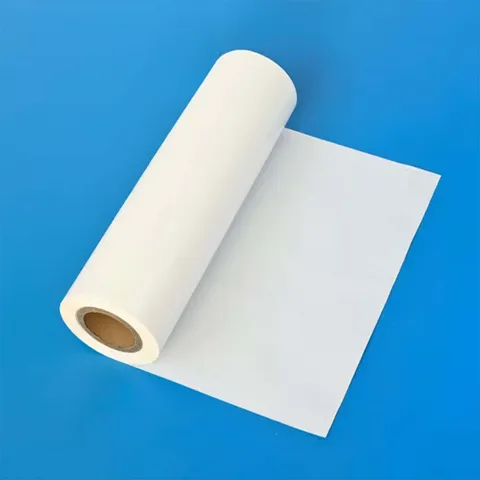
| Glassine paper rolls | Interleaving sliced meat and cheese, lining chocolate boxes, wrapping fudge blocks, coffee bag inner sheets | One or two colours as a loose repeat | 300 mm × 150 m | Tears on a dispenser bar; can be cut to sheets before dispatch |
|---|
Choose bags when the product is sold one at a time and walks out with the customer. Choose rolls when the paper goes between layers or around a block on a packing bench. Most bakeries begin with custom printed glassine bags and add a roll later.
How does glassine behave with butter, chocolate and steam?
Butter is the usual worry and glassine handles it well. A piece of shortbread left in a glassine bag until morning leaves a faint shadow at most, because the fat stays at the surface of the pressed sheet.
Chocolate and caramel set and release cleanly from the polished face. That is why chocolatiers use it as a box interleaf and why a fudge block comes out of its wrap without tearing the paper.
Steam is the thing it cannot cope with. Glassine has no moisture barrier, so a warm pastry or a cut cheese passes water into the sheet and it goes limp. Cool bakes fully, and keep wet cheese for paraffin paper.
Sizing a glassine bag or roll against the product
Measure the item and add room for the closure. A bag should take the product with about 8 mm spare each side and 40 mm above it for the fold; a roll should be the item's width plus 50 mm each side.
- 90 × 140 mm bag: a pair of macarons, a single truffle, a tea sample
- 120 × 170 mm bag: a brownie, a flapjack, a 100 g bag of fudge
- 140 × 190 mm bag: a large cookie, a scone, a full-size soap bar
- 190 × 250 mm bag: a croissant, a slab of tablet, a greeting card
- 300 and 375 mm rolls for a counter dispenser; 450 and 600 mm for lining trays and boxes
The 300 m rolls suit a bench that works all day; a 150 m glassine roll for the counter fits the usual dispenser.
Printing on a translucent sheet
Glassine takes ink well on its polished face, but it is translucent, so the print also shows faintly from the back. We keep bag artwork to one or two spot colours on the front panel and set roll artwork as a loose repeat at about 100 mm, so a full mark lands on every tear.
Dark inks win. A pastel on glassine almost disappears once a brown cookie sits behind it, while a bottle green or a black stays crisp. Pantone solid-coated matches hold well on white; the cream tint warms them slightly.
The printing on greaseproof paper guide shows how the proof mocks up a translucent bag over a dark and a pale filling.
Three habits that spoil glassine
Bagging straight from the oven. Steam condenses inside, the paper wilts and the bake softens. A rack and twenty minutes fixes it.
Choosing a bag by the width of the product alone. The fold needs 40 mm, and a thick brownie needs a touch of extra width or the top will not lie flat.
Ordering a four-colour, edge-to-edge design. Glassine is a one or two colour paper. More than that looks heavy on a sheet this thin and hides the thing you chose it to show. If you are unsure which weight suits the job, the guide to greaseproof paper weights covers glassine alongside the heavier sheets.
How ordering glassine works
- Tell us the product, its size and roughly how many bags or metres you get through in a month.
- A written quote arrives within one working day with the bag size or roll width we would choose.
- Send your logo and we lay out a free design proof, on a bag face or across a roll repeat.
- Change the proof as often as you like; nothing prints until you approve it.
- Allow 4 to 6 working days for production, and 2 to 3 more for free tracked delivery anywhere on the UK mainland.
The minimum is 1,000 bags or one roll. Ask for a weight sample on the glassine quote request form if you want to feel both before you decide.