What size greaseproof sheet wraps a 120 mm brioche burger bun?
Use 350 × 350 mm. A 120 mm bun with a tall stack needs more than 300 mm to fold under and still close over the top, and brioche crumbs want the extra tuck.
By the team at The Greaseproof Paper ·
Most greaseproof orders go wrong on size, not on paper. This guide gives the sheet dimensions in millimetres that wrap, line and cover each common menu item, and shows how to measure your own food before you fill in a quote.
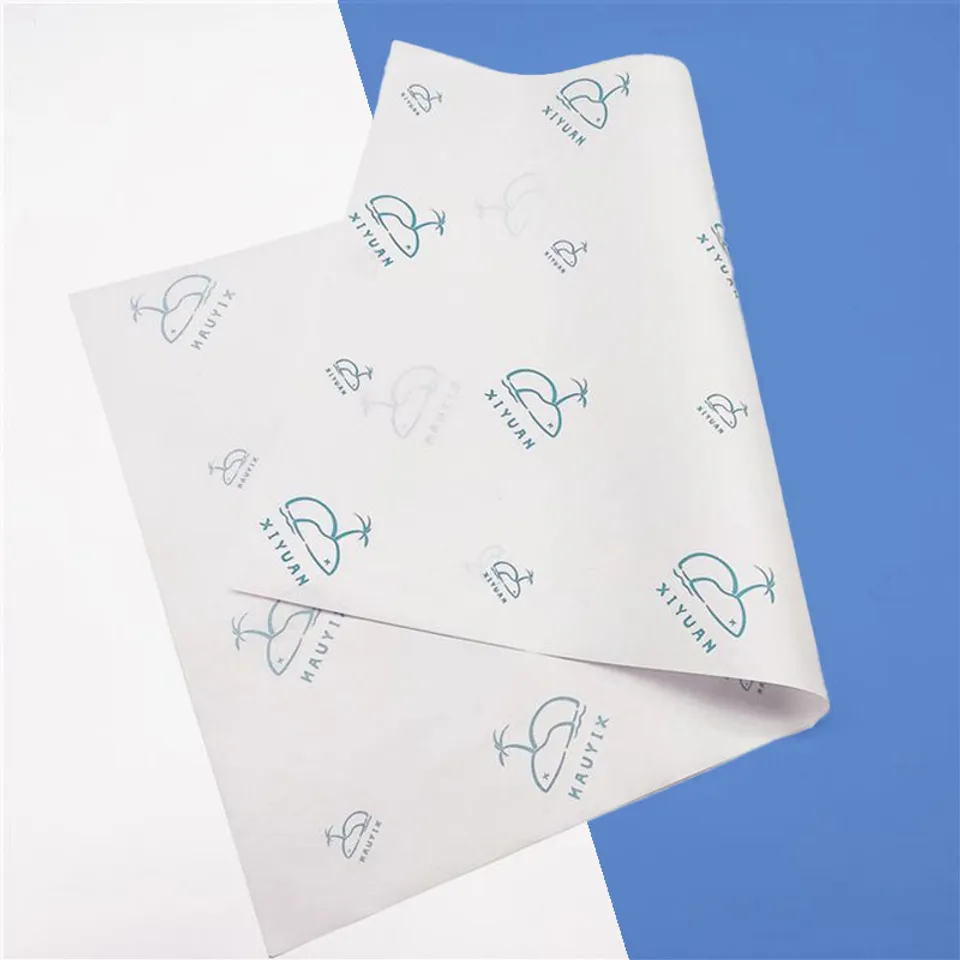
Measure the food at its widest point and its tallest point, with a ruler rather than by eye. Then use this rule: sheet width equals the food width plus twice its height plus 50 mm for the tuck. That 50 mm is what most people forget, and it is the difference between a wrap that stays shut and one that unrolls in the bag.
Take a burger 100 mm across and 70 mm tall. Width plus two heights is 240 mm, add 50 mm and you reach 290 mm, which is why 300 × 300 mm is the standard burger sheet. A taller stacked burger with bacon and onion rings pushes that to 350 × 350 mm.
For a liner the sum is simpler. Measure the inside of the basket or tray at the base, then add the side height on each edge you want covered.
A chip shop uses greaseproof in three ways, and each one wants a different sheet. An open sheet under a tray portion needs only to cover the base and sides of the tray: 250 × 375 mm does this for most medium trays and hangs just over the edges.
A cone for a small portion is rolled from a 300 × 300 mm square, tip at one corner. A full fish and chips wrap, with the paper folded over the top and the ends tucked, wants the big sheet, 450 × 700 mm, and often a second lighter sheet inside it for the grease.
If you serve both trays and wraps, order both sheets rather than making one size do two jobs. A full-wrap sheet is wasteful under a tray, and a tray sheet will not close over a large cod.
A 100 mm bun with a single patty and salad wraps in 300 × 300 mm (about 12 in square) with the ends tucked underneath. This is the sheet most burger bars run, and a one-colour logo on a 60 to 90 mm repeat fills it nicely.
Drop to 250 × 250 mm for a slider or a 75 mm bun, and go up to 350 × 350 mm for a double or anything with a tall stack. A 300 × 400 mm oblong suits a long roll, a hot dog or a sub, with the long side running along the bread.
Brioche crumbs are worth a mention. They fall into the fold, so give brioche the next size up and tuck tighter. The four sizes on the burger wrap paper page in millimetres cover most buns.
A liner is judged by how much hangs over the rim. Too little and it slides about as the customer eats; too much and it flaps into the sauce. Aim for 20 to 30 mm over the rim on each side.
A small serving basket, the kind that holds a portion of wings or a scoop of chips, takes 250 × 250 mm. The usual oval or oblong basket takes 300 × 300 mm or 300 × 400 mm. A sharing platter or a large wooden board moves up to 400 × 600 mm, where the sheet becomes a placemat as much as a liner.
Liners work harder than wraps, because a knife and fork go through the food onto the paper. Specify 45 to 55 gsm for anything that lives on a plate or a board, and the basket liner sizes and weights page lists the four typical cuts.
Commercial kitchens size their trays to the gastronorm standard, and liners should follow it. A half gastronorm pan is 325 × 265 mm inside, and a full pan is 530 × 325 mm. A flat liner cut to those figures sits on the base; add the side height if you want the paper up the walls.
Domestic baking trays are less tidy, typically 320 × 230 mm to 390 × 270 mm, so measure yours and quote the inside figure. Round down rather than up, because a liner that bunches at the corners traps fat underneath.
Air fryer baskets are mostly square or round between 160 and 220 mm across. A 160 × 160 mm or 200 × 200 mm liner with the corners trimmed drops into most of them, and an oven-safe greaseproof grade copes with the 200°C setting. Keep the liner flat and weighted by the food so the fan cannot lift it. The tray and air fryer liner sizes page shows both gastronorm cuts.
Cold and warm handheld food has its own set of sheets, and they are generally smaller and lighter than chip shop paper.
A sandwich shop can usually cover the whole counter with two sizes, 250 × 250 mm and 300 × 400 mm, and have the same logo printed on both.
The table collects the sizes above in one place. Each is the typical pick; any other size is a custom cut and is quoted the same way.
| Food | Typical sheet | Format | Weight |
|---|---|---|---|
| Standard 100 mm burger | 300 × 300 mm | Full wrap, tucked under | 40 to 45 gsm |
| Double or stacked burger | 350 × 350 mm | Full wrap | 45 gsm |
| Hot dog, sub, kebab | 300 × 400 mm | Rolled along the long side | 40 gsm |
| Chips in an open tray | 250 × 375 mm | Open sheet | 35 to 40 gsm |
| Fish and chips, full wrap | 450 × 700 mm | Folded over and tucked | 40 gsm outer |
| Oval or oblong basket | 300 × 400 mm | Liner | 45 to 55 gsm |
| Sharing board or platter | 400 × 600 mm | Liner or placemat | 55 gsm |
| Half gastronorm tray | 265 × 325 mm | Flat liner | 45 to 55 gsm |
| Full gastronorm tray | 325 × 530 mm | Flat liner | 45 to 55 gsm |
| Air fryer basket | 160 × 160 or 200 × 200 mm | Flat liner | 45 gsm |
If two foods on your menu land on neighbouring sizes, take the larger one. A few millimetres of spare paper never spoils a wrap; a few millimetres short always does.
Square sheets suit round food. A burger, a bap, a cone of chips and a scoop of wings all sit in the middle of a square and the four corners meet on top or tuck underneath. Oblongs suit long food: a sub, a hot dog, a kebab, a baguette, where the long side of the paper runs along the length of the bread.
Oblongs also suit trays and baskets, because almost every tray is longer than it is wide. A 300 × 400 mm liner in a 280 × 380 mm basket gives an even overhang all round; a square in the same basket falls short on the ends.
The one case where an oblong is wrong for a round item is the chip cone. A cone is rolled from a square, corner to corner, and an oblong rolls into a lopsided funnel that leaks at the tip.
If an item on your menu is not in the table, this takes two minutes with a ruler.
Send that figure with your artwork and we will confirm it on the proof. The full sheet and roll size chart lists every standard cut if you would rather pick from a list.
The four sizes on each product page are the usual picks, not the only ones. Any size in millimetres can be cut to order, and an odd size costs no more to proof.
Rolls suit counters that tear off a length for each customer: a deli slicer, a cheese counter, a butcher's block. They are quoted by width in millimetres and length in metres, and the print repeats along the roll so a torn length always carries the logo.
Whichever route you take, the minimum is 1,000 sheets or one roll and the proof is free.
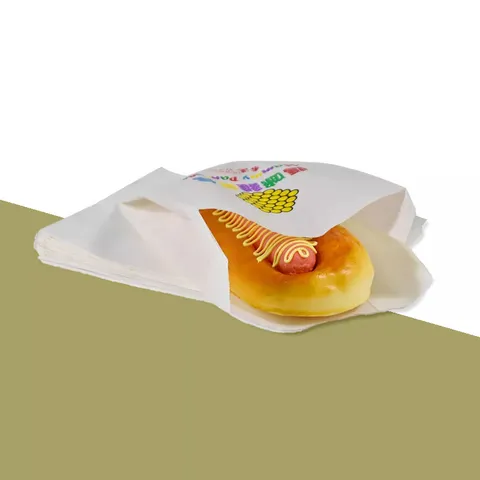 Burger Wrap PaperFrom £0.25 a sheet250 × 250 mm · 300 × 300 mm · 350 × 350 mmBurgers, chicken burgers and wrapsSee this paper
 Greaseproof Basket LinersFrom £0.25 a sheet250 × 250 mm · 300 × 300 mm · 300 × 400 mmChip baskets, trays and platesSee this paper
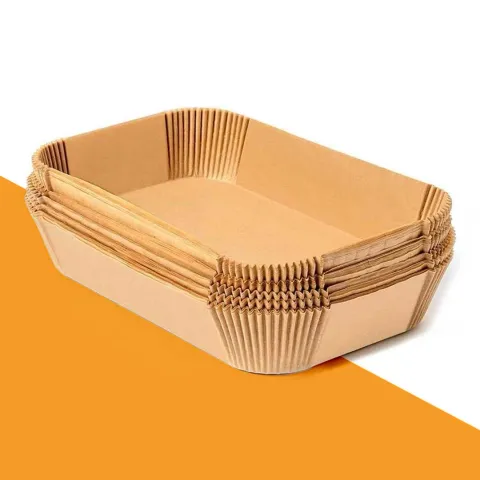 Tray and Air Fryer LinersFrom £0.25 a liner160 × 160 mm · 200 × 200 mm · 265 × 325 mmBaking trays, gastronorm pans and air fryersSee this paper
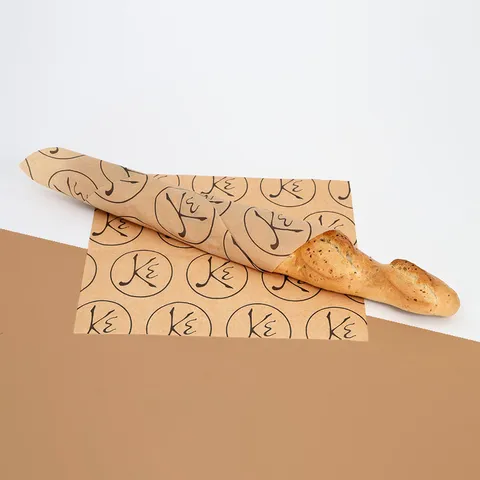 Custom Printed Greaseproof SheetsFrom £0.25 a sheet250 × 375 mm · 300 × 300 mm · 350 × 450 mmLogo wraps for hot foodSee this paper
The questions UK buyers ask before a first order. Type a word to filter the cards, or open one for the full answer.
Use 350 × 350 mm. A 120 mm bun with a tall stack needs more than 300 mm to fold under and still close over the top, and brioche crumbs want the extra tuck.
265 × 325 mm sits flat on the base of a half gastronorm pan.
265 × 325 mm sits flat on the base of a half gastronorm pan. Add the side height to each edge if you want the paper to come up the walls of the tray.
Yes, that is the usual chip shop wrap sheet. It folds over a large portion with the ends tucked, and most shops put a lighter 300 × 300 mm sheet inside it against the fish.
About 20 to 30 mm over the rim on each side. Less and it slides around as the customer eats; more and the edges flop into the sauce.
A 200 × 200 mm flat liner with the corners trimmed drops in and sits under the food.
A 200 × 200 mm flat liner with the corners trimmed drops in and sits under the food. Keep it weighted so the fan cannot lift it, and use an oven-safe grade.
Yes, and it should be. A cone rolls from a square, corner to corner, into an even point.
Yes, and it should be. A cone rolls from a square, corner to corner, into an even point. An oblong sheet rolls into a lopsided funnel that leaks at the tip.
A 300 × 400 mm oblong rolled along the long side. The 400 mm edge runs the length of the roll and leaves enough to fold at each end.
Yes. Any size in millimetres is a custom cut and is proofed and quoted the same way as a standard one.
Yes. Any size in millimetres is a custom cut and is proofed and quoted the same way as a standard one. Give us the finished size and the food it wraps.
Measure the inside of the base in millimetres, round down to avoid bunching at the corners, then add the side height to any edge you want covered.
Usually not. A cut bloomer sandwich wraps in 300 × 300 mm, but a bap or a slice of cake wraps in 250 × 250 mm or 200 × 200 mm, because there is less height to cover.
No match. Ask us on WhatsApp or call +44 7578 382054.
Name the paper, a size and a quantity, and attach a logo if you have one. A written price and a free design proof come back within one working day. Rather talk it through? Call +44 7578 382054 or message us on WhatsApp.